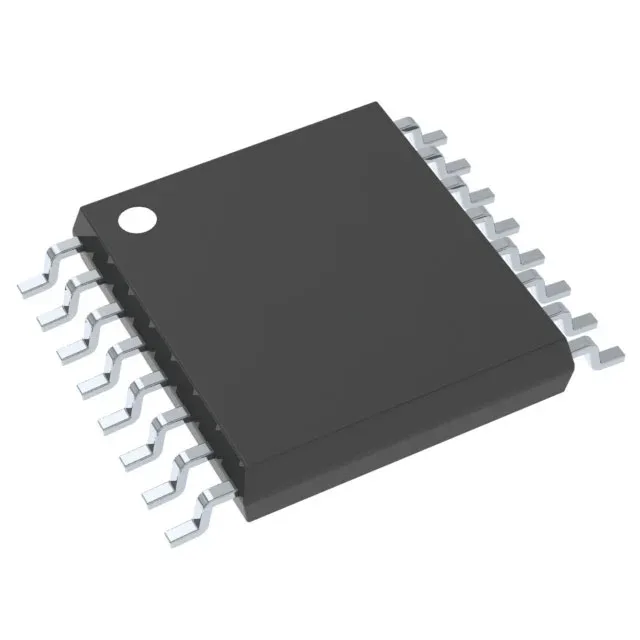
Texas Instruments SN65LVDS047PW — Interface & Transceivers

SN65LVDS047PW LVDS Driver, 400 Mbps, 16-TSSOP, Active

MPNSN65LVDS047PW
Active

Texas Instruments 65LVDS series LVDS driver, SN65LVDS047PW, quad driver 4/0, 400Mbps data rate, 3V~3.6V supply, -40°C~85°C, 16-TSSOP package.

$5.0500Ref. price · indicative, final on quote
Independent supplier — new & surplus stockAuthenticity-screened · ESD-safe packingListing updated Aug 2026

Specifications

SN65LVDS047PW specifications
ParameterValue
TypeDriver
Series65LVDS
MountingSurface Mount
Supply voltage3V ~ 3.6V
ProtocolLVDS
Operating temperature-40°C~85°C
PackageTube
Data rate400Mbps
Case16-TSSOP (0.173\", 4.40mm Width)
Number of drivers (Receivers)4/0

Product details

Quad LVDS driver for 400 Mbps point-to-point links

It handles differential signalling at up to 400 Mbps per channel, translating single-ended CMOS/TTL inputs into low-swing LVDS outputs for driving twisted-pair or PCB traces over short-to-medium distances. Typical deployment: backplane clock/data distribution, camera link interfaces, and any high-speed serial link where low noise and low power matter.

Each of the four drivers switches at 400 Mbps, which is a 200 MHz fundamental. At that edge rate, the PCB trace length and impedance matching start to matter — keep stub lengths under 0.5 inch and use controlled-impedance traces (100 Ω differential). The LVDS output swing is typically 350 mV into a 100 Ω termination, so the receiver end needs a proper differential termination resistor close to the input pins. The part does not include internal fail-safe biasing; the designer should add external biasing if the bus can float.

Supply and temperature — fit for industrial backplanes

Frequently asked questions

What is the data rate of SN65LVDS047PW?

Each of the four LVDS driver channels supports a data rate of 400 Mbps.

Is SN65LVDS047PW pin compatible with SN65LVDS047?

The base product number is 65LVDS047, and the PW suffix indicates the 16-TSSOP package variant. The SN65LVDS047 (non-PW) typically comes in a different package (e.g., SOIC). Pin compatibility depends on the package — the PW variant uses the 16-TSSOP footprint, not the wider SOIC. Check the respective datasheets for pin assignments.