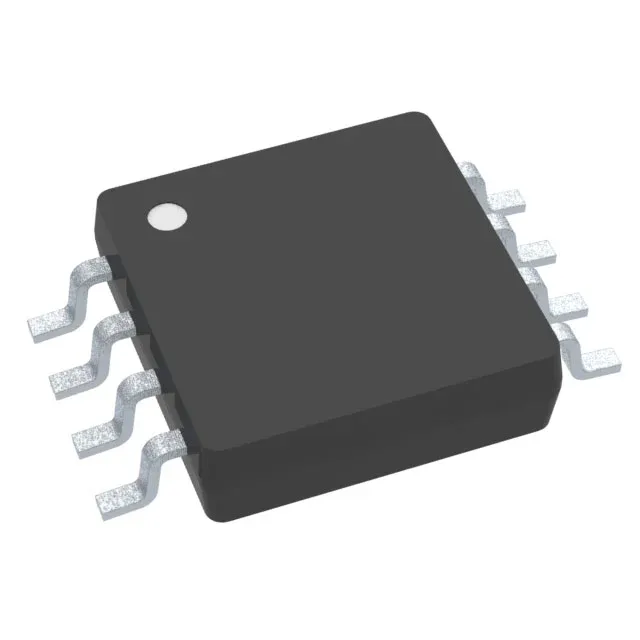
What this RS-485 transceiver does on the bus
The 80 mV of receiver hysteresis is the spec that keeps a marginal bus from chattering. On a long cable run or in a noisy factory-floor environment, that built-in noise margin saves you from adding external Schmidt triggers or software debounce.
50 Mbps — what that means for cable length and signal integrity
At 50 Mbps you're looking at roughly 50 to 100 feet of usable cable before the signal edge degrades enough to cause bit errors, depending on the cable's characteristic impedance and termination quality. The half-duplex nature means you're sharing the pair for transmit and receive, so the bus turnaround time matters — the SN65HVD78DGKR's driver enable-to-output timing is tight enough that you can run a polled multi-drop network without wasting dead time between frames. For lower-speed applications (say 250 kbps to 10 Mbps) the part works fine too — it's not slew-limited, so the fast edges are there whether you need them or not. That's worth noting for the layout engineer: keep the stub lengths short and place the termination resistor close to the receiver input pins to avoid reflections.
Package, supply, and layout notes
The 8-VSSOP package (3.00 mm width) is a small-outline MSOP footprint that fits tight layouts. Decouple with a 0.1 µF ceramic right at the supply pin; the fast edge rates draw transient current that a distant bulk cap won't catch. Surface-mount only, as you'd expect from an 8-VSSOP.