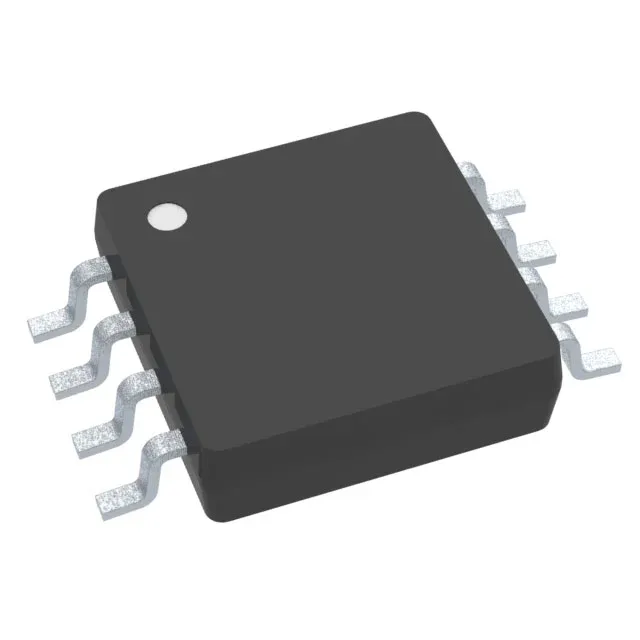
Texas Instruments SN65HVD77DGKR — Interface & Transceivers

SN65HVD77DGKR RS-485/RS-422 Transceiver, 50 Mbps

MPNSN65HVD77DGKR
Active

Texas Instruments SN65HVD77DGKR RS-422/RS-485 transceiver, full duplex, 50 Mbps data rate, 3V–3.6V supply, 8-VSSOP package, -40°C to 125°C.

$5.0400Ref. price · indicative, final on quote
Independent supplier — new & surplus stockAuthenticity-screened · ESD-safe packingListing updated Aug 2026

Specifications

SN65HVD77DGKR specifications
ParameterValue
TypeTransceiver
MountingSurface Mount
Supply voltage3V ~ 3.6V
ProtocolRS422, RS485
Operating temperature-40°C~125°C
DuplexFull
PackageTape & Reel (TR); Cut Tape (CT)
Data rate50Mbps
Case8-TSSOP, 8-MSOP (0.118\", 3.00mm Width)
Receiver hysteresis70 mV
Number of drivers (Receivers)1/1

Product details

The Texas Instruments SN65HVD77DGKR is a full-duplex RS-422/RS-485 transceiver that pushes the data rate to 50 Mbps, putting it in the high-speed tier of the 65HVD7x family. Full-duplex operation means separate transmit and receive pairs, so the bus never needs direction switching — useful for point-to-point links where throughput matters and the protocol can dedicate two twisted pairs.

Housed in an 8-VSSOP (DGK package code), the footprint matches the standard 8-MSOP / 8-TSSOP land pattern — 3.00 mm body width, 0.65 mm pitch. Surface-mount only; no through-hole variant. The small package suits space-constrained I/O cards and compact sensor modules, but the fine pitch means the reflow profile and solder-paste stencil aperture need attention for reliable assembly.

That means no last-time-buy scramble and normal lead times through distribution. For dual-sourcing or a pin-compatible second source, the SN65HVD78 (same footprint, same supply range) drops the data rate to 20 Mbps but adds a lower-power mode — a trade worth knowing if the bus speed requirement is lower and quiescent current matters more.

Frequently asked questions

Is SN65HVD77DGKR full duplex or half duplex?

It is full duplex, meaning separate transmit and receive signal pairs — no driver/receiver direction pin to toggle.

Can SN65HVD77DGKR be used as a direct replacement for MAX485?

Not directly. The MAX485 is half-duplex and typically runs on 5 V, while the SN65HVD77DGKR is full-duplex and 3.3 V only. The pinout and protocol differ; a board redesign would be needed.

What is the difference between SN65HVD77 and SN65HVD78?

The SN65HVD77 runs at 50 Mbps; the SN65HVD78 is limited to 20 Mbps but includes a low-power shutdown mode that drops quiescent current significantly. Both share the same footprint and supply range.