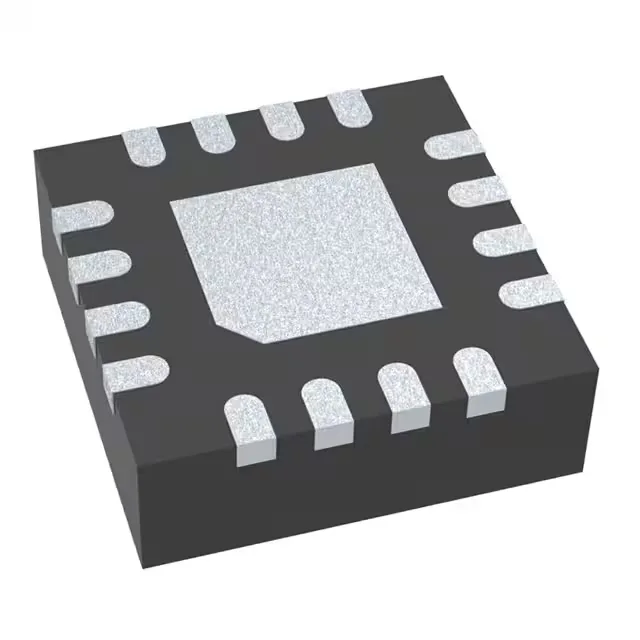
AISG transceiver for base-station control
The 115 kbps data rate matches the AISG v2.0 control-signaling requirement — not a high-speed bus part, but the right rate for tilt, bias-T, and RET (Remote Electrical Tilt) commands. The wide supply range lets it interface directly with both legacy 5 V baseband controllers and modern 3.3 V logic without external level translation. The 16-VFQFN package with exposed pad aids heat sinking through the PCB ground plane.
At 3.3 V supply, the transceiver's logic inputs are 3.3 V-compatible; at 5 V, they accept 5 V CMOS levels. This avoids a dedicated level shifter when the baseband ASIC or MCU runs at 3.3 V and the bus side operates at 5 V common-mode. The single driver/receiver pair suits point-to-point or multidrop AISG buses with one master and up to several slave devices. For longer chains or higher node counts, consider a part with a higher receiver input impedance — but for the standard AISG bus topology this is the correct fit.
The datasheet's recommended land pattern (page 17 in the latest revision) specifies a 2.1 mm × 2.1 mm solder-paste aperture on the thermal pad. Without the via stitch, junction temperature rises significantly above 85°C ambient at continuous bus activity.