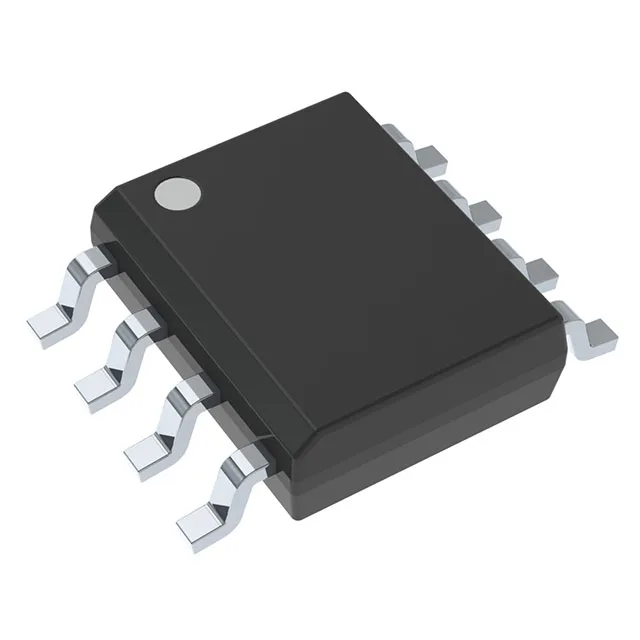
CAN transceiver for 5 V industrial and automotive networks
The single driver and single receiver pair (1/1) is the standard CAN transceiver topology for a single bus node. With a receiver hysteresis of 125 mV, the part rejects common-mode noise on the differential bus lines — a practical margin for industrial environments where cable length and ground offset degrade signal integrity.
The ROHS3 compliance is current and covers the EU RoHS exemption landscape through the latest revision.
The 2 Mbps data rate is the ceiling for this transceiver's signalling speed on the CAN bus. Classic CAN (ISO 11898-2) tops out at 1 Mbps, so this part has headroom for CAN FD implementations that use a faster data phase after the arbitration phase. In practice, the achievable bus speed depends on network length, stub length, and termination — at 2 Mbps expect a shorter maximum bus length (tens of metres) compared to a 250 kbps network. The 125 mV hysteresis helps maintain a clean differential signal at these higher bit rates.