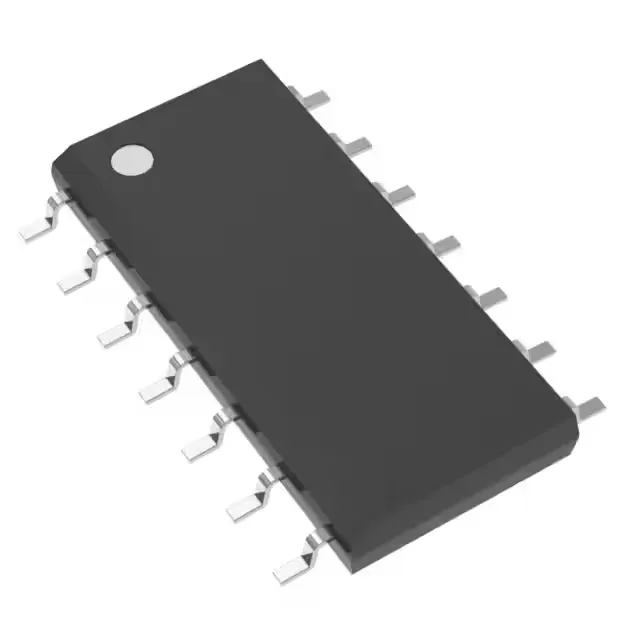
Texas Instruments SN65HVD1470DR — Interface & Transceivers

SN65HVD1470DR RS-485 Transceiver, Full Duplex, 400kbps

MPNSN65HVD1470DR
Active

Texas Instruments SN65HVD1470DR RS-422/RS-485 full-duplex transceiver, 400kbps data rate, 3V to 3.6V supply, 70mV receiver hysteresis, -40°C to 125°C operating temperature, 14-SOIC package.

$4.9500Ref. price · indicative, final on quote
Independent supplier — new & surplus stockAuthenticity-screened · ESD-safe packingListing updated Aug 2026

Specifications

SN65HVD1470DR specifications
ParameterValue
TypeTransceiver
MountingSurface Mount
Supply voltage3V ~ 3.6V
ProtocolRS422, RS485
Operating temperature-40°C~125°C
DuplexFull
PackageTape & Reel (TR); Cut Tape (CT)
Data rate400kbps
Case14-SOIC (0.154\", 3.90mm Width)
Receiver hysteresis70 mV
Number of drivers (Receivers)1/1

Product details

What this RS-485 transceiver does on the bus

It handles the bus-driver and receiver pair for a single differential link, with the receiver hysteresis set at 70 mV to reject line noise without external filtering.

Temperature range and supply — fit for industrial environments

The 14-SOIC footprint is a common, board-friendly package that reflows on a standard profile.

Frequently asked questions

What is the difference between SN65HVD1470DR and SN65HVD1471DR?

The SN65HVD1470DR and SN65HVD1471DR are both full-duplex RS-485 transceivers from the same TI family. The primary difference is data rate: the 1470 is rated at 400 kbps, while the 1471 supports higher speeds. Pinout and package are the same, so they are drop-in replacements if the system can tolerate the rate difference.

What is the data rate of SN65HVD1470DR?

The SN65HVD1470DR is rated for a maximum data rate of 400 kbps. This covers common industrial protocols like Modbus RTU at 115.2 kbps with margin, but is not suitable for 1 Mbps or faster links.

Is SN65HVD1470DR compatible with 3.3V systems?

Yes. It is directly compatible with 3.3 V logic and power rails, but cannot be used on a 5 V RS-485 bus without level translation.