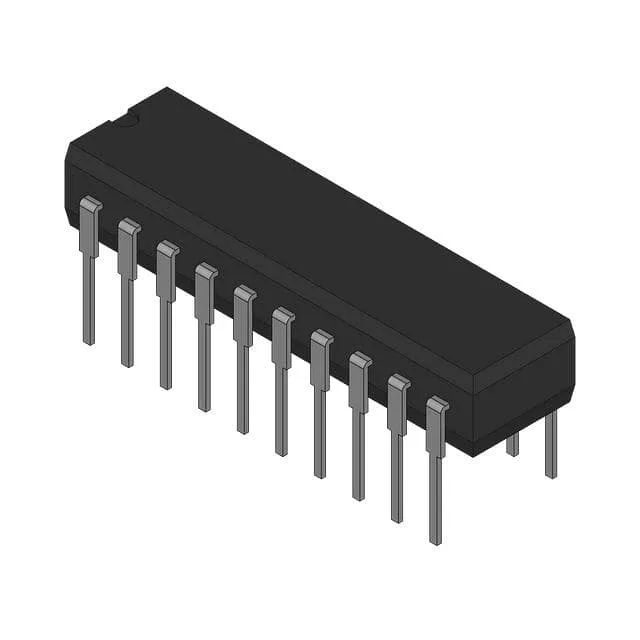
Octal storage register for bus-oriented systems
The Texas Instruments SN54ALS273J is an octal D-type flip-flop — eight edge-triggered storage elements in a single DIP package, designed to hold and release data on a common clock edge. In a processor system, this part sits between the data bus and latched outputs, capturing a byte-wide word on each clock transition and holding it stable for downstream logic or a peripheral interface. The 54ALS family uses Advanced Low-Power Schottky logic, which balances propagation delay against supply current — a common choice for bus-interface registers in mid-speed control systems where power dissipation per gate matters.
Supplied in bulk (tube or tray), the SN54ALS273J uses a standard 20-pin DIP ceramic or plastic body — the exact substrate depends on the 54ALS grade (military-temp range). The through-hole leads mate with a 0.300-inch-wide DIP socket or soldered into plated holes on a 0.100-inch pitch grid. Layout note: decouple each VCC pin with a 0.1 µF ceramic capacitor placed within 0.5 inches of the package; the 54ALS family draws transient current on clock edges, and a local bypass keeps the supply rail within the 5 V ±10 % tolerance.