2.5 V fixed reference for high-temperature precision rails
It is designed for applications requiring a stable voltage rail across extreme temperatures, from -55°C to 210°C, making it suitable for downhole drilling, engine bay electronics, and satellite systems where standard commercial or industrial references would fail.
Noise and drift — what the specs mean for your ADC chain
Low-frequency noise is specified at 7.5 µVp-p over 0.1 Hz to 10 Hz, which sets the noise floor for a precision ADC reference input. The 40 ppm/°C temperature coefficient means the output shifts by 100 µV over a 100°C swing — a factor to budget in the system error stack-up, especially in the high-temperature end of the operating range.
Input headroom and output drive
The input voltage range spans 3.25 V to 18 V, giving plenty of headroom above the 2.5 V output even with a noisy or loosely regulated supply rail. Output current is rated at 7 mA — enough to bias a single ADC reference input or a small resistive divider, but not intended to power external loads. The 1.5 mA supply current is the quiescent draw from the input rail.
Ceramic package — why it matters for the BOM
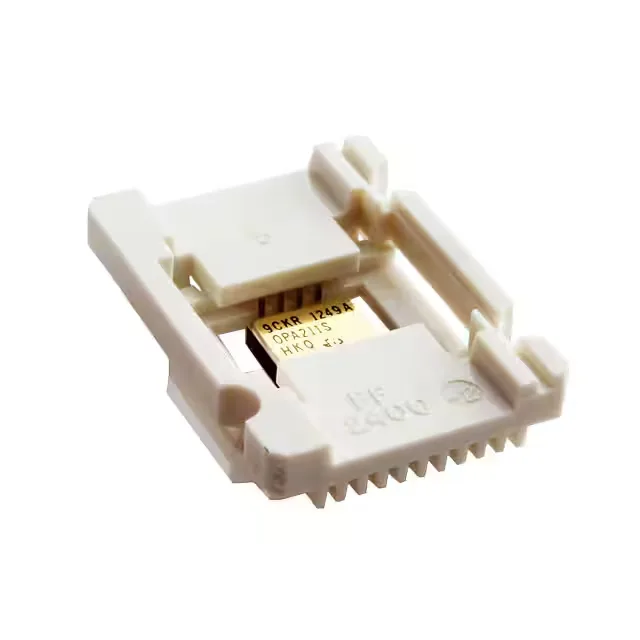
The 8-CFP (ceramic flatpack) package, also described as 8-CSOIC with a 0.220-inch body width, is a hermetic surface-mount package. Unlike plastic SOIC, the ceramic body handles the 210°C operating temperature without delamination or outgassing. The footprint is similar to a standard SOIC-8, but the thermal expansion coefficient matches ceramic substrates used in hybrid and MCM assemblies.