10 V at ±0.05% — the precision anchor for your ADC reference
This level of accuracy means the reference error contributes less than 1 LSB in a 14-bit ADC system at 10 V full scale, keeping the conversion chain tight without external trimming.
3 ppm/°C drift — stability across the temperature envelope
For a 10 V reference, that translates to a maximum voltage shift of roughly 5 mV across the entire temperature span — well within the budget for a 16-bit SAR ADC or a precision DAC's internal reference input.
10 mA output and 1.2 mA supply current
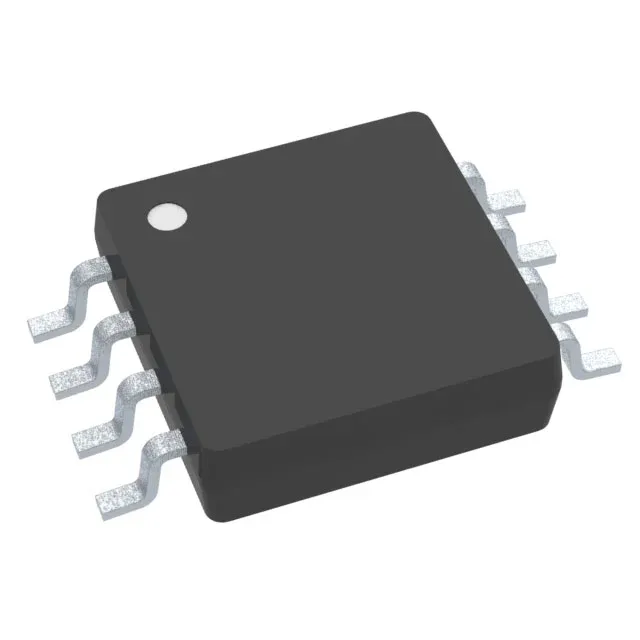
The part can source or sink up to 10 mA, enough to drive multiple ADC reference inputs or a small resistive load without an external buffer. Supply current is 1.2 mA typical, keeping the thermal footprint low in the 8-VSSOP package. Input voltage range is 10.2 V to 18 V, so a standard 12 V or 15 V rail works directly.
This is the region that matters for DC measurement systems — weigh scales, strain-gauge bridges, and precision data acquisition — where flicker noise would otherwise limit the achievable resolution.
For a precision reference that may stay in a BOM for years, this removes the sourcing uncertainty that comes with NRND or obsolete parts.