3 V fixed output, ±0.2 % — the reference for precision automotive rails
The REF3130AQDBZRQ1 is a series voltage reference from Texas Instruments, part of the Automotive AEC-Q100-qualified REF3130 family. It delivers a fixed 3 V output with a tight ±0.2 % initial tolerance and a 20 ppm/°C temperature coefficient, making it a stable bias for ADCs, DACs, and sensor excitation in automotive electronics.
20 ppm/°C drift — what it buys the system
That keeps the reference error budget small enough for a 12-bit ADC without external trimming — the drift stays under 1 LSB at 3 V full-scale. Low-frequency noise is specified at 39 µVp-p (0.1 Hz to 10 Hz) and 57 µVrms (10 Hz to 10 kHz). For a 3 V reference driving a 12-bit converter, the peak-to-peak noise represents roughly 0.05 LSB — negligible for most automotive sensing chains.
10 mA output, 135 µA supply — sized for the always-on module
The 10 mA output current is enough to bias multiple op-amps or a small ADC reference input while leaving headroom. The 135 µA quiescent current keeps the reference viable for battery-backed or always-on automotive ECUs where every microamp is budgeted. The series topology means the load current comes from the input rail, not the output — no load-regulation penalty across the 10 mA range.
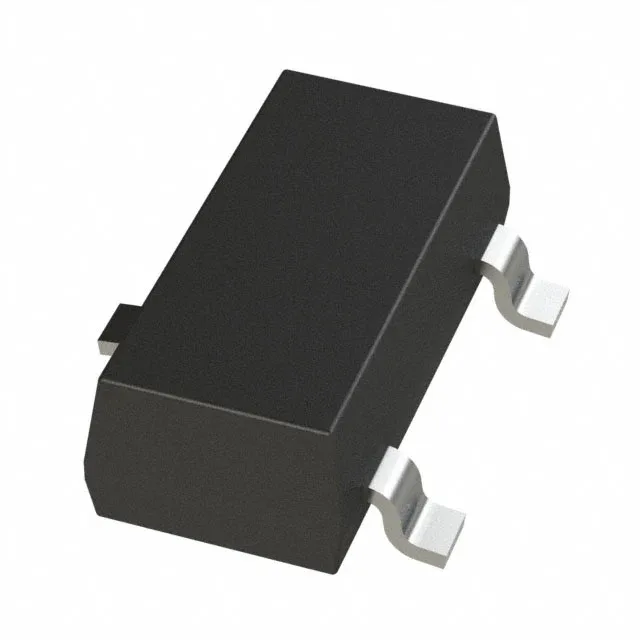
SOT-23-3 — a standard footprint for the BOM
The SOT-23-3 (TO-236 / SC-59) package is a three-pin surface-mount footprint common across the REF31xx family. It places cleanly with standard pick-and-place and reflow profiles. No exposed pad — the thermal path is through the leads, so keep the copper traces wide enough to sink heat.