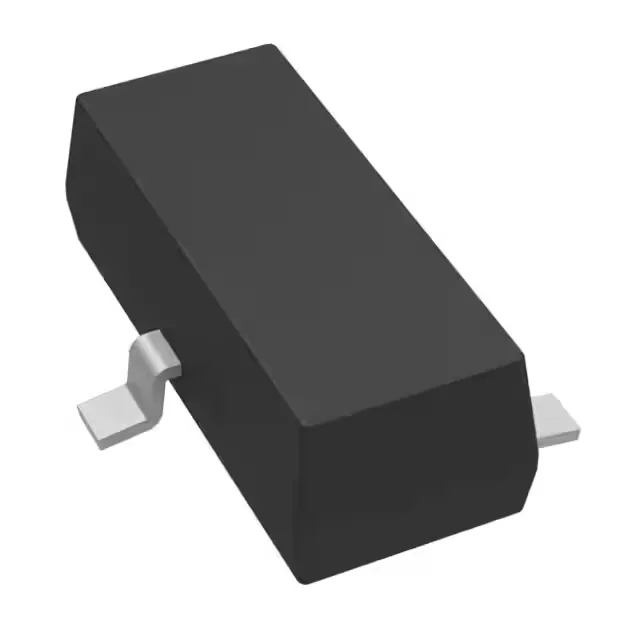
1.25 V fixed reference — what the SOT-23-3 footprint buys you
±0.2 % initial accuracy and 20 ppm/°C drift — the system error budget
Initial tolerance of ±0.2 % means the output is guaranteed within 2.5 mV of 1.25 V at 25 °C without external trim. For a 12-bit ADC with a 2.5 V reference, that error is about 2 LSB — acceptable in most industrial control loops but tight enough that a 0.1 % resistor divider after the reference would add more uncertainty than the reference itself. Temperature drift is 20 ppm/°C typical. That matters if the reference feeds a comparator threshold that must stay inside a window over temperature; for a ratiometric ADC the drift cancels if the sensor and reference share the same thermal environment.
Low-frequency noise is 17 µVp-p in the 0.1 Hz to 10 Hz band, and 24 µVrms from 10 Hz to 10 kHz. For a 16-bit ADC with a 1.25 V span (19 µV per LSB), the 0.1–10 Hz noise is about 0.9 LSB p-p — the reference does not dominate the noise budget. No external output capacitor is specified for noise reduction, but a 0.1 µF ceramic at the output pin is standard practice to suppress high-frequency pickup from the supply trace.
10 mA output drive and 135 µA quiescent current
The reference can source up to 10 mA, enough to bias a string of pull-up resistors or feed the reference input of multiple ADCs on the same rail. Quiescent supply current is 135 µA typical — low enough that the reference adds negligible overhead to a battery-powered sensor node, but not the lowest in the family (the REF33xx series draws under 5 µA).