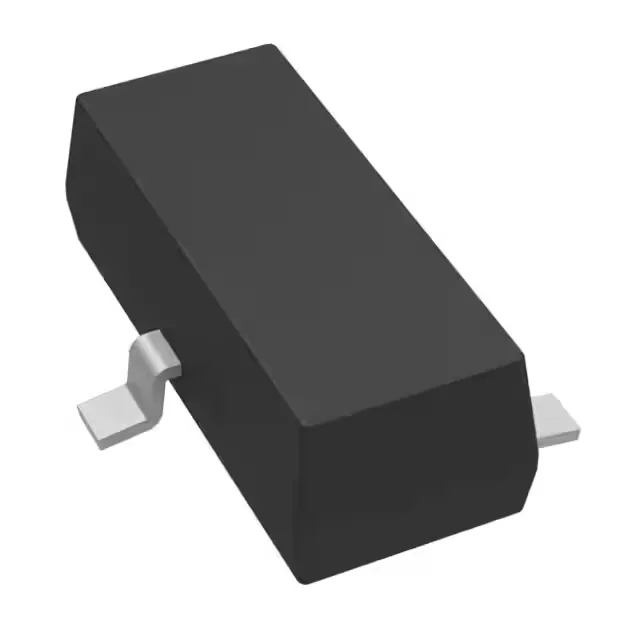
Texas Instruments REF3025AIDBZRG4 — Analog & Data Acquisition

REF3025AIDBZRG4 2.5V Series Voltage Reference, ±0.2%

MPNREF3025AIDBZRG4
End of Life

Texas Instruments REF3025AIDBZRG4, series voltage reference, 2.5V fixed output, ±0.2% tolerance, 75ppm/°C, 25mA output, 50µA supply, SOT-23-3, -40°C to 125°C.

$2.4500Ref. price · indicative, final on quote
Independent supplier — new & surplus stockAuthenticity-screened · ESD-safe packingListing updated Jul 2026

Specifications

REF3025AIDBZRG4 specifications
ParameterValue
Output typeFixed
MountingSurface Mount
Reference typeSeries
Voltage - input2.55V ~ 5.5V
Voltage - output (Min (Fixed))2.5V
Output current25 mA
Current - supply50µA
Operating temperature-40°C~125°C(TA)
PackageTape & Reel (TR); Cut Tape (CT)
Tolerance±0.2%
CaseTO-236-3, SC-59, SOT-23-3
Noise - 0.1Hz to 10Hz28µVp-p
Noise - 10Hz to 10kHz80µVrms
Temperature coefficient75ppm/°C

Product details

2.5V precision reference in a SOT-23-3 footprint

It is designed for precision analog circuits where a stable, low-noise voltage rail is required — think ADC reference inputs, DAC bias, or a precision comparator threshold.

Output drive and quiescent budget

Rated for 25 mA output current, this reference can supply multiple loads — several ADC reference inputs or an op-amp supply rail — without an external buffer. The 50 µA quiescent current is low enough for battery-powered instrumentation where every microamp counts.

Noise and drift for precision chains

Output noise is specified at 28 µVp-p (0.1 Hz to 10 Hz) and 80 µVrms (10 Hz to 10 kHz). For a 16-bit ADC with a 2.5V reference, the noise contribution from the reference is below 1 LSB, making it suitable for measurement and data-acquisition systems.

Frequently asked questions

What is the closest pin-compatible alternative to REF3025AIDBZRG4?

Within the same REF3025 family, the REF3025AIDBZT is the same die and same SOT-23-3 package but supplied in Tape & Reel with a different reel quantity. The REF3025AIDBZR is functionally identical and differs only in the packaging suffix (R vs RG4). All three share the same 2.5V output, ±0.2% tolerance, and pinout.