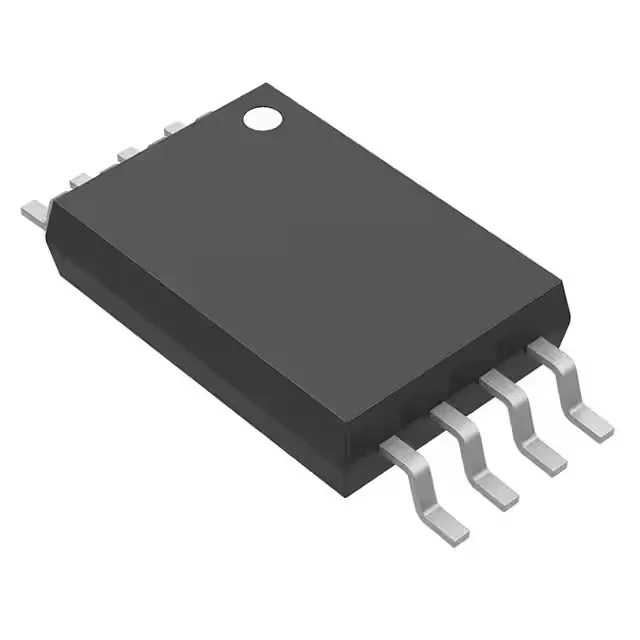
Texas Instruments RC4558IPWR — Analog & Data Acquisition

RC4558IPWR Dual General-Purpose Op-Amp, 3 MHz, 1.7 V/µs

MPNRC4558IPWR
Active

Texas Instruments RC4558IPWR dual general-purpose op-amp, 3 MHz gain bandwidth, 1.7 V/µs slew rate, 10 V to 30 V supply, 2.5 mA per channel, 8-TSSOP package, -40°C to 85°C.

$0.1242Ref. price · indicative, final on quote
Independent supplier — new & surplus stockAuthenticity-screened · ESD-safe packingListing updated Jul 2026

Specifications

RC4558IPWR specifications
ParameterValue
Output typeDifferential
MountingSurface Mount
Amplifier typeGeneral Purpose
Voltage - input offset500 µV
Voltage - supply span30 V
Current - supply2.5mA (x2 Channels)
Current - input bias150 nA
Current - output (Channel)10 mA
Operating temperature-40°C~85°C
Gain bandwidth product3 MHz
PackageTape & Reel (TR); Cut Tape (CT)
Slew rate1.7V/µs
Case8-TSSOP (0.173\", 4.40mm Width)
Number of circuits2

Product details

Dual op-amp for signal conditioning and audio stages

Each of the two channels draws 2.5 mA supply current, which keeps the total quiescent draw under 5 mA for the package — a reasonable trade-off for the 3 MHz GBW in multi-channel boards where thermal budget matters.

The RC4558IPWR operates from a 10 V to 30 V total supply span, which covers the common ±5 V to ±15 V split-rail configurations used in industrial signal chains. The differential output type and 10 mA per-channel output current let it drive moderate loads — think ADC input buffers or headphone pre-drivers — without an external buffer stage. For a general-purpose op-amp these are within the expected range; if your application demands sub-100 µV Vos, a precision amplifier like the OPAx188 family would be a tighter fit.

Housed in an 8-TSSOP (4.40 mm width) with a 0.65 mm pin pitch, this part is a drop-in for any dual op-amp layout using that footprint.

Frequently asked questions

What is the difference between RC4558IPWR and RC4558P?

The primary difference is the package: RC4558IPWR comes in an 8-TSSOP surface-mount package, while RC4558P is in a through-hole PDIP package. Both share the same dual general-purpose op-amp core with 3 MHz GBW and 1.7 V/µs slew rate. The choice depends on your assembly process — reflow for TSSOP vs wave solder or socket for PDIP.

What is the slew rate of RC4558IPWR?

The slew rate is 1.7 V/µs. This limits large-signal bandwidth — a 10 V peak-to-peak output swing can be reproduced up to approximately 54 kHz before slew-induced distortion appears.