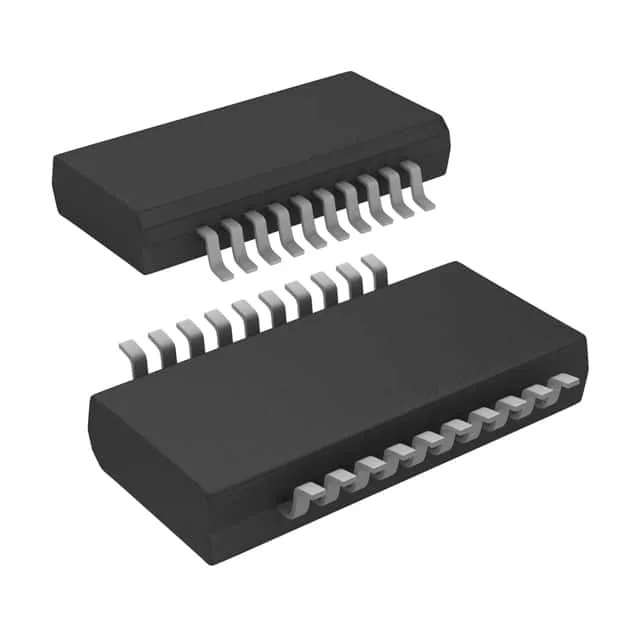
What does the PLL1708DBQ actually do?
The Texas Instruments PLL1708DBQ is a PLL Multi-Clock Generator that takes a single CMOS or crystal input and produces six CMOS clock outputs (1:6 ratio) at frequencies up to 36.87 MHz.
Frequency ceiling and supply rails
The maximum output frequency is 36.87 MHz — that is the ceiling for any single output. If your design needs a clock above that, this part will not reach it. The supply range (2.7V to 3.6V) lines up with 3.3V logic families; at 2.7V the PLL may still lock, but the output drive strength drops and the jitter spec tightens. Stay at 3.3V nominal unless your system already runs a lower rail. The input accepts either a CMOS-level square wave or a crystal resonator. If you use a crystal, the on-chip oscillator and PLL handle the multiplication — the divider/multiplier is listed as Yes/No, meaning the PLL multiplies up from the crystal frequency but there is no internal output divider stage. The six outputs all run at the same multiplied frequency.
The -25°C to 85°C range covers most industrial control, telecom, and audio equipment — not full automotive or military, but fine for a factory-floor PLC or a networked sensor hub. The 20-pin count is modest; the six outputs plus supply and ground leave room for a few control pins.