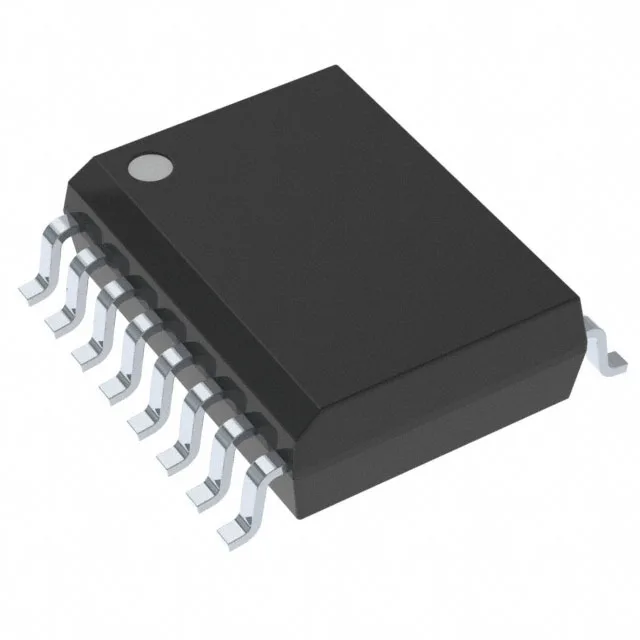
Instrumentation front-end for industrial sensing
The 2 pA input bias current and 1 mV input offset voltage keep DC errors low enough for 12- to 14-bit systems without external trimming. Supply range spans 9 V to 36 V, accommodating both single- and dual-rail analog front ends.
The 5 MHz -3 dB bandwidth supports sensor conditioning for vibration analysis and high-speed data acquisition where the signal content extends into the low megahertz range. Together these specs define the usable small-signal and large-signal response — if your application needs to resolve a 1 µs pulse, this part tracks it cleanly.
Precision specs for DC accuracy
Input bias current of 2 pA (typical) minimizes voltage drop across source resistors — important when the sensor impedance is tens of kilo-ohms. The 1 mV input offset voltage is the uncalibrated DC error; in a gain-of-100 stage that becomes 100 mV at the output, so plan for a system calibration step or a downstream offset-nulling DAC if you need better than 0.1% accuracy. The 17 mA output drive per channel is enough to drive a typical ADC input or a 100 Ω load.
Quiescent current is 12.4 mA, reasonable for a precision amplifier in a multi-channel system.
For volume or long-term program requirements, an RFQ is the right next step.