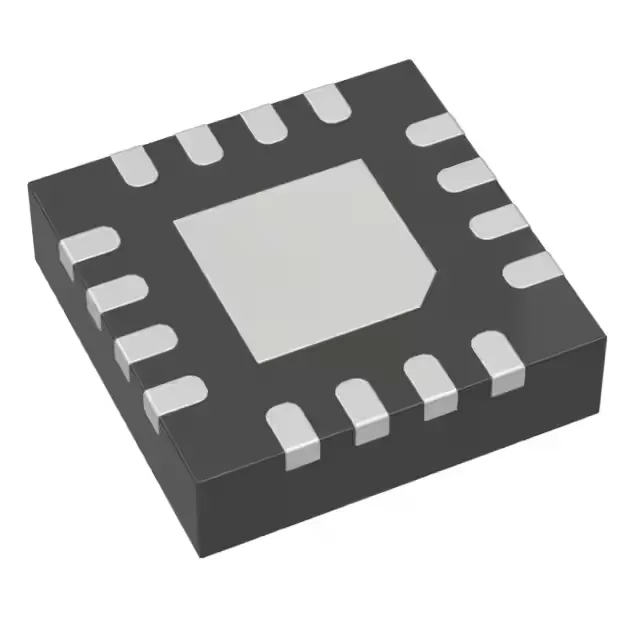
It provides eight push-pull I/O lines that can be individually configured as inputs or outputs, controlled over a 100 kHz I²C bus. The part includes a POR (power-on reset) feature and an interrupt output pin, making it a standard choice for adding digital I/O to microcontrollers that have run out of pins — common in industrial control panels, sensor hubs, and embedded systems where the host MCU is already on the I²C bus.
The wide range also covers battery-powered designs that drift down to 2.5 V and 5 V industrial rails that might run high. The I²C interface is standard-mode only at 100 kHz — fine for polling a few switches or LEDs, but not for high-speed data streaming.
Output drive — what the 1 mA source / 25 mA sink means
Each I/O pin can source 1 mA or sink 25 mA. The sink current is the practical figure for driving LEDs, relay coils through a transistor, or logic inputs. The 1 mA source limit means you are not driving a load directly from the high side — use an external pull-up or a PNP/NMOS if you need more than a few milliamps sourced. For a typical LED with a 2 V forward drop at 5 V supply, a 120 Ω resistor limits current to 25 mA, which the sink side handles cleanly.
The 16-VQFN (3x3) has an exposed thermal pad underneath — the datasheet calls it 16-VFQFN Exposed Pad. That pad is soldered to the board for thermal and mechanical stability. Reworking this package needs a hot-air station with a fine nozzle; the QFN footprint is tight, and the pad under the part makes alignment critical.
Not rated for extended automotive under-hood (125°C) or military, but fine for cabin or chassis-mount applications that stay within the range.
ROHS3 compliant.