What this I2C I/O expander brings to the board
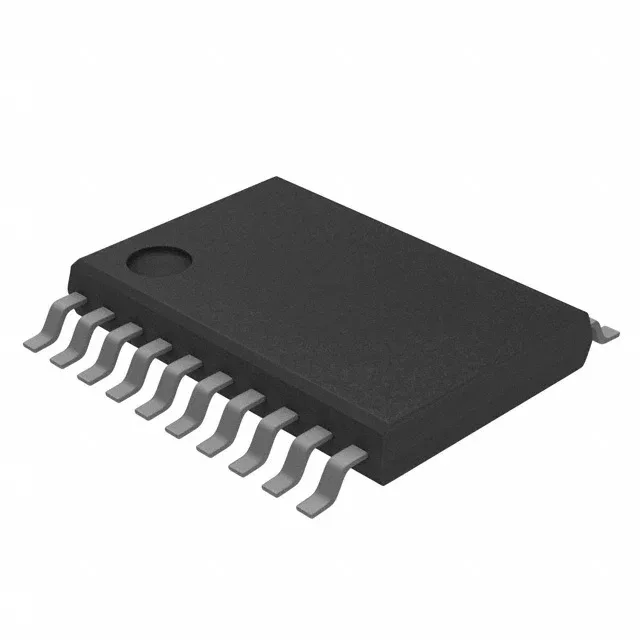
The NXP PCF8574PW is an 8-bit I2C I/O expander in a 20-TSSOP package, providing eight bidirectional I/O lines controlled via the I2C bus at up to 100 kHz. It features push-pull outputs, a power-on reset (POR) circuit, and an interrupt output that signals the host when input levels change, reducing the need for constant polling. Output current is rated 1 mA source and 25 mA sink per pin, enough to drive LEDs directly or interface with small relays through a transistor.
The 2.5 V to 6 V supply range means the expander can sit on a 3.3 V microcontroller bus without a level shifter, or on a 5 V industrial rail. The 1 mA source / 25 mA sink per pin is asymmetric — typical for I2C expanders — so if you are driving a load that needs more than 1 mA high-side, plan for an external pull-up or a transistor. The sink capability is generous: a single pin can handle a standard LED with a current-limiting resistor, or a small-signal relay coil if you stay within the package total power limit.
Interrupt output and push-pull drive
The interrupt output (INT) is an open-drain line that pulls low when any input pin changes state. In firmware, you connect INT to a GPIO edge-triggered interrupt on the host MCU, eliminating the need to poll the expander at a fixed interval. The push-pull output type on the I/O pins means you do not need external pull-up resistors on the I/O lines themselves — the expander drives them high and low actively, saving two resistors per pin versus an open-drain design.
20-TSSOP footprint and assembly
The 20-TSSOP body measures 4.40 mm wide with a 0.65 mm pin pitch — a compact surface-mount package that fits on dense PCBs. It is supplied in Tube, so for automated pick-and-place you will need to transfer to a feeder-compatible carrier or order tape-and-reel variants (check the PCF8574PWR suffix).