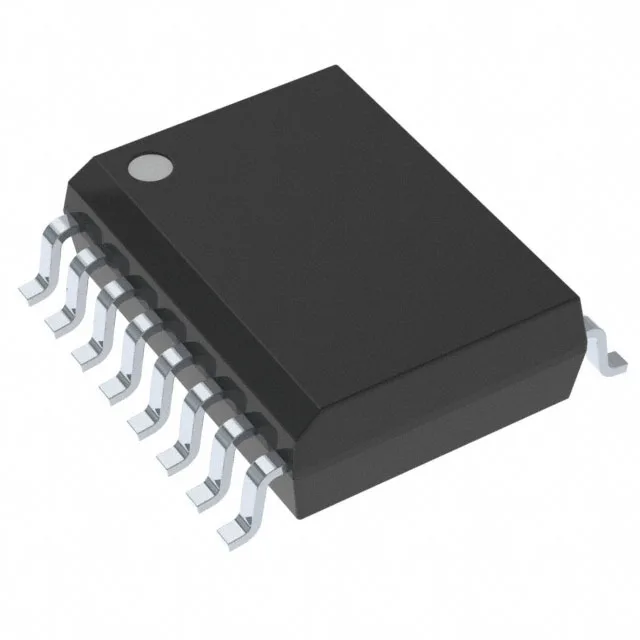
Texas Instruments PCF8574ADWRG4 — Interface & Transceivers

Texas Instruments PCF8574ADWRG4 I²C GPIO Expander, 100 kHz

MPNPCF8574ADWRG4
Obsolete

Texas Instruments PCF8574ADWRG4 I²C-bus I/O expander, 8 I/O, push-pull output, 100 kHz clock, 2.5V–6V supply, -40°C to 85°C, 16-SOIC (0.295", 7.50mm width), Tape & Reel.

Independent supplier — new & surplus stockAuthenticity-screened · ESD-safe packingListing updated Jul 2026

Specifications

PCF8574ADWRG4 specifications
ParameterValue
Output typePush-Pull
MountingSurface Mount
Supply voltage2.5V ~ 6V
Current - output source (Sink)1mA, 25mA
Clock frequency100 kHz
InterfaceI²C
Operating temperature-40°C~85°C
PackageTape & Reel (TR)
FeaturesPOR
Number of i (O)8
Case16-SOIC (0.295\", 7.50mm Width)
Interrupt outputYes

Product details

It operates at a 100 kHz clock frequency, includes a power-on reset (POR) feature, and provides an interrupt output to alert the host of input changes.

For a production BOM that already uses this part, the only reliable supply path is the independent market — surplus inventory, new-old-stock, or broker-sourced material.

8 I/O, 100 kHz, push-pull — the specs that matter for fit

Eight I/O lines, each configurable as input or output, with a push-pull output stage that can source 1 mA or sink 25 mA per pin. The 100 kHz I²C clock is the standard-mode speed — fine for polling switches, reading sensors, or driving LEDs, but not for high-speed data streaming. The interrupt output (active-low) lets the host sleep between events, saving power in battery applications.

16-SOIC wide-body — field-swappable footprint

The wide-body SOIC is easier to hand-solder or rework with a standard iron than narrow-body SOIC or QFN packages — good news if you are swapping this on a customer site without a hot-air station.

Frequently asked questions

Is PCF8574ADWRG4 equivalent to PCF8574?

The PCF8574 and PCF8574A are functionally identical — both are 8-bit I²C GPIO expanders with the same pinout, same 100 kHz clock, same supply range, and same output drive. The difference is the I²C slave address range: the PCF8574 uses addresses 0x20–0x27, while the PCF8574A uses 0x38–0x3F. The PCF8574ADWRG4 is the 'A' variant, so it responds to the 0x38–0x3F block. If your design already uses the non-A version, you cannot drop in this part without changing the address in firmware or hardware.

What is the replacement for PCF8574ADWRG4?

There is no official TI successor listed for this specific order code. The closest functional replacement within the family is the PCF8574A (non-'DWR' suffix) in the same 16-SOIC package — it uses the same I²C address range (0x38–0x3F) and same pinout. For a drop-in replacement with identical address, check the PCF8574ADW (non-'R' suffix) if still available in surplus. Alternatively, the NXP PCA8574A is a pin-compatible second source with the same address map.