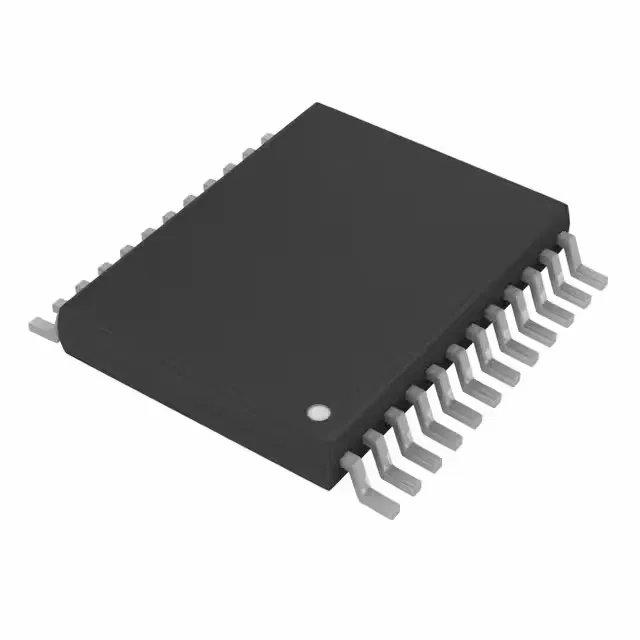
Texas Instruments PCA9555DGVR — Interface & Transceivers

PCA9555DGVR I2C GPIO Expander, 16 I/O, 400 kHz, 24-TVSOP

MPNPCA9555DGVR
Active

Texas Instruments PCA9555DGVR, 16-bit I²C/SMBus GPIO expander, 400 kHz, 2.3V–5.5V, push-pull outputs, 10mA source / 25mA sink, POR, interrupt, -40°C–85°C, 24-TVSOP.

$1.2090Ref. price · indicative, final on quote
Independent supplier — new & surplus stockAuthenticity-screened · ESD-safe packingListing updated Aug 2026

Specifications

PCA9555DGVR specifications
ParameterValue
Output typePush-Pull
MountingSurface Mount
Voltage2.3V ~ 5.5V
Current - output source (Sink)10mA, 25mA
Frequency400 kHz
InterfaceI²C, SMBus
Operating temperature-40°C~85°C
PackageTape & Reel (TR); Cut Tape (CT)
FeaturesPOR
Number of i (O)16
Case24-TFSOP (0.173\", 4.40mm Width)
Interrupt outputYes

Product details

It gives a microcontroller 16 extra push-pull I/O lines over a two-wire bus, with a power-on reset (POR) that forces all outputs low at start-up — no floating pins during boot.

The push-pull outputs can source 10 mA or sink 25 mA per pin — enough to drive a standard LED directly (add a series resistor) or pull a relay coil through a transistor. If you need more current, the 25 mA sink rating is per-pin; the package total is the ceiling, so don't parallel outputs to exceed it.

Interrupt output and POR — design-in gotchas

The interrupt output (/INT) goes low when any input pin changes state, which lets the MCU sleep until a button press or sensor edge wakes it — saves power in battery-backed panels. The POR feature means all I/O pins come up as inputs (high-impedance) after power-on, so no output glitch on a load that expects a known state. One gotcha: if you need the outputs to be high at reset, you'll need external pull-ups or a different expander that defaults high.

Package and footprint — 24-TVSOP vs 24-TSSOP

It's a surface-mount footprint that matches the standard 24-pin TSSOP land pattern, so if your board already has a 24-TSSOP footprint for another expander, the PCA9555DGVR drops in.

Frequently asked questions

How many I/O pins does PCA9555DGVR have?

It provides 16 I/O pins, configurable as inputs or push-pull outputs, with an interrupt output for change-of-state detection.

Can PCA9555DGVR replace PCA9555A?

The PCA9555DGVR is the same base part (PCA9555) in a different package variant (TVSOP vs TSSOP). If your board footprint is for a 24-TVSOP or 24-TSSOP, it is pin-compatible. The PCA9555A has a different I²C slave address range; verify that the address conflict doesn't exist in your system before swapping.