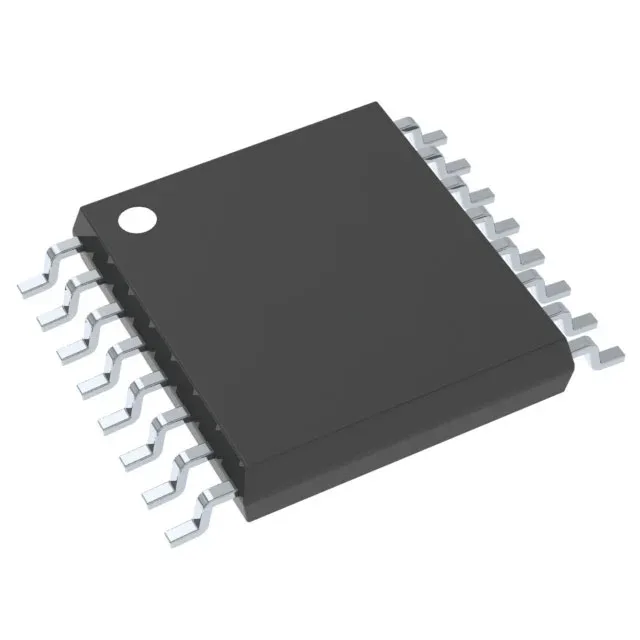
It provides eight push-pull I/O ports controlled over a two-wire serial bus, with a power-on reset (POR) that forces all outputs to a known state at startup. The device operates from a 2.3V to 5.5V supply, making it suitable for mixed-voltage systems — 3.3V MCU rails, 5V legacy logic, or battery-powered designs.
The 2.3V–5.5V supply span means the PCA9554PWRG4 can sit on a 3.3V rail with 200 mV of headroom below the minimum, or directly on a 5V bus without a level shifter. If you need to switch a load beyond 25 mA, buffer the output with a discrete MOSFET; the expander itself is not rated for direct high-current drive. The 400 kHz I²C clock rate keeps the bus fast enough for polling all eight ports in under 200 µs, which is fine for button scans or status reads but not for high-speed data streaming.
Interrupt output and POR — why they matter for system reliability
The interrupt output lets the expander signal the host MCU when an input changes state, eliminating the need for constant polling over I²C. This is useful in low-power designs where the host sleeps between events. The power-on reset ensures all I/O pins default to inputs after power-up, preventing unintended output states during a brown-out or cold start. Without POR, the expander might latch outputs high on a glitchy power ramp — a known failure mode in earlier I/O expanders without this feature.
The 16-TSSOP footprint is common across TI's PCA9554 family, so a board layout for the PW package variant accepts this part without changes.