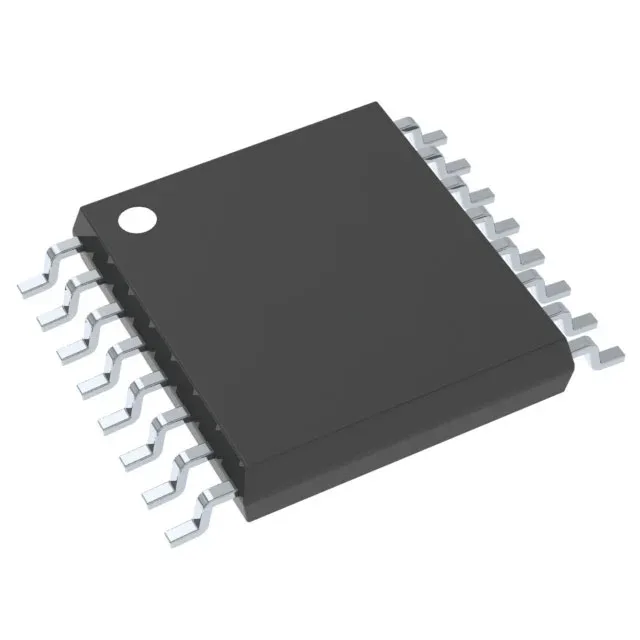
It provides eight push-pull I/O pins that can be individually configured as inputs or outputs, controlled over a two-wire serial bus at up to 400 kHz. A dedicated interrupt output (INT) signals the host when an input state changes, reducing the need for continuous polling. The part includes a power-on reset (POR) circuit that initializes the I/O ports to a known state at power-up.
Supply range and drive strength — fitting into mixed-voltage systems
Each I/O pin can source 10 mA or sink 25 mA, enough to drive LEDs, small relays, or logic inputs directly. The push-pull output structure eliminates the need for external pull-up resistors on output pins, though the I²C bus lines themselves still require pull-ups per the standard.
NRND status — what it means for procurement
This means Texas Instruments has flagged it for eventual discontinuation; new designs should not start with this part. Existing production lines that already use it can continue sourcing through the independent distribution channel while stock lasts.