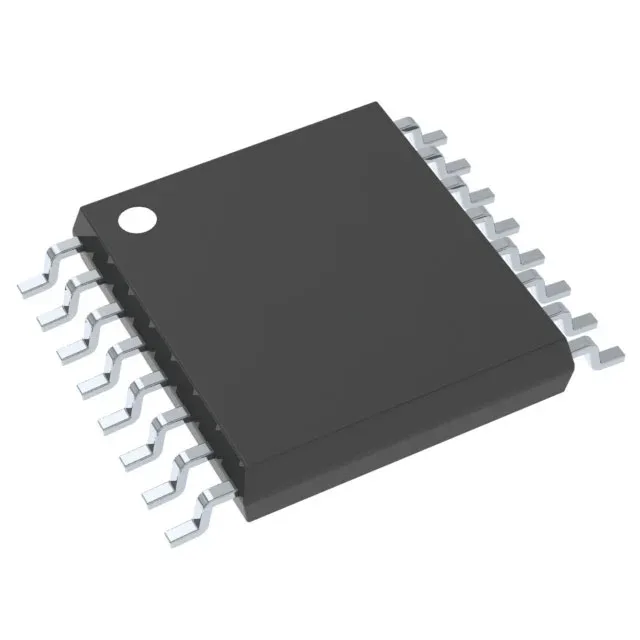
What this 8-bit I²C I/O expander does on the board
It provides eight push-pull I/O pins controlled over a two-wire serial bus at up to 400 kHz, with a built-in power-on reset (POR) that forces all outputs low at power-up. An interrupt output signals the host when an input changes, eliminating continuous polling.
TI no longer manufactures this specific suffix variant. There is no official TI-released successor order code for the PWG4 suffix, but the broader PCA9554 family includes active package options that are pin-compatible at the die level.
Output drive and interrupt — two specs that matter in a panel retrofit
Each I/O pin can source 10 mA or sink 25 mA, enough to drive indicator LEDs or small relays directly without external buffers. The interrupt output (active-low, open-drain) connects to a host GPIO or interrupt controller; it asserts when any input pin changes from its previous state, which saves the host from polling the expander over I²C. In a retrofit scenario where the original panel used a separate CPLD for GPIO expansion, this part replaces that logic with a simpler serial-bus approach, though the 400 kHz bus clock limits throughput for high-speed handshaking.