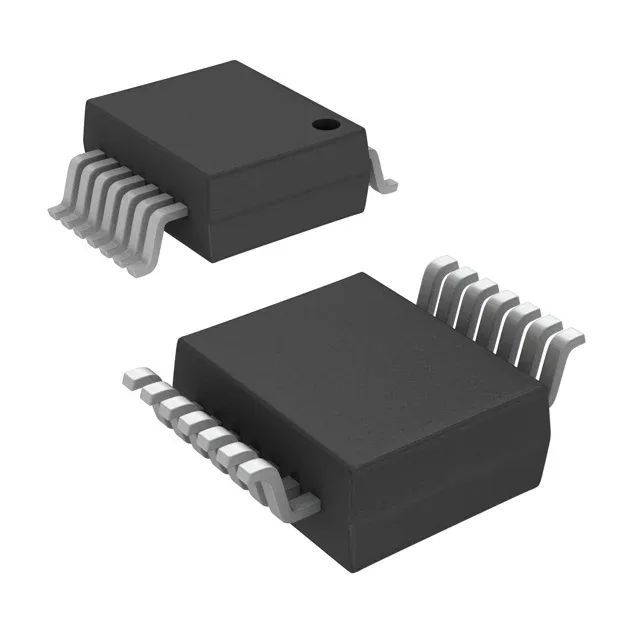
8-bit I²C GPIO expander — active, no LTB risk
It provides eight push-pull I/O pins, a power-on reset (POR) circuit, and an interrupt output that signals the host when an input changes state. The I²C clock runs at 400 kHz (Fast-mode), which keeps bus transactions short enough for most polling or event-driven firmware loops.
Output drive and interrupt — what the ratings mean
Each I/O can source 10 mA or sink 25 mA. The source current is lower, so if you need to light an LED from the high side, budget a buffer or use the sink path with the LED wired to VCC. The interrupt output (active-low, open-drain) saves the host from polling the I²C bus — the expander pulls the line low when any input configured as an input changes state. This matters for firmware that needs to wake from sleep only on a pin transition rather than polling at a fixed interval.
The 16-TFSOP body is 4.40 mm wide, with a 0.65 mm pin pitch. The supplier device package is 16-TVSOP, which is electrically identical but may have a slightly different body thickness.
The base product number PCA9554 covers multiple package variants (D, PW, DGV), so if the 16-TFSOP package is not preferred, a pin-compatible sibling in a different footprint exists within the same family.