It provides eight push-pull GPIOs that can be configured as inputs or outputs, with a power-on reset (POR) circuit that forces all channels to a known input state at startup — no external supervisor needed. The interrupt output (INT) signals the host on any input change, letting the main MCU sleep until an event occurs.
At 3.3 V the part runs directly off a common digital rail; at 5 V it mates with legacy 5 V logic or industrial sensors without a level shifter. If the load exceeds 25 mA per pin, an external buffer is needed. The 400 kHz I²C clock is Fast Mode; bus capacitance and pull-up resistor values must be calculated for the full bus loading.
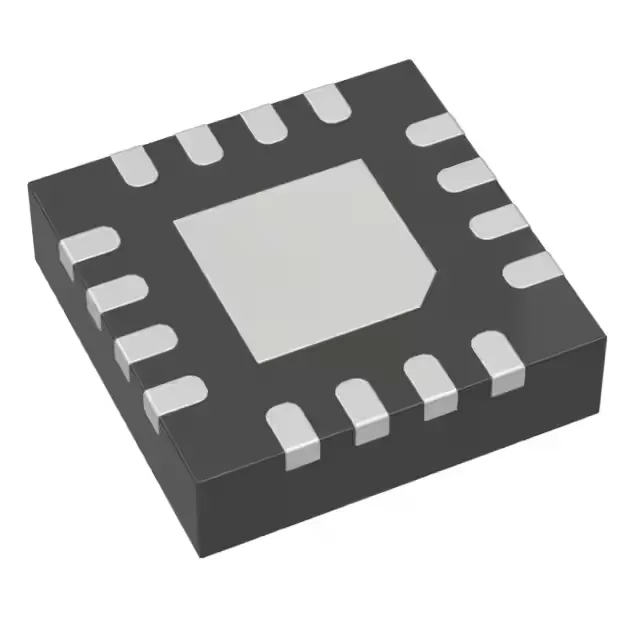
The 16-VQFN (3x3 mm) package with exposed pad is suited for space-constrained PCBs in industrial control panels, outdoor telecom gear, and factory automation.
TI lists the PCA9554ARGTR as Active. For BOM lines that need a qualified second source, the PCA9554A (same function, different I²C address) is a direct alternative — the address difference avoids conflicts when multiple expanders share the same bus.