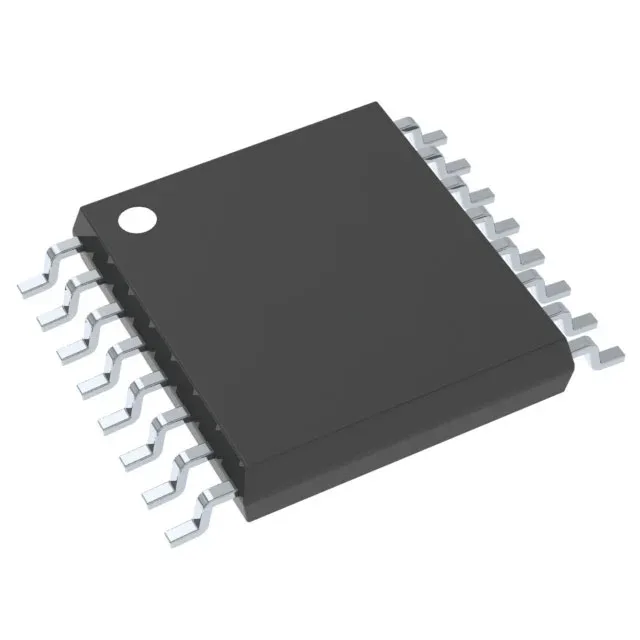
It integrates a Power-On Reset (POR) circuit so the outputs initialize to a known state at power-up, and the push-pull output stage can source 10 mA or sink 25 mA per pin — enough to drive LEDs or small relays directly without external transistors. The I²C interface runs at up to 400 kHz, and an interrupt output signals the host when any input pin changes state, reducing polling overhead.
The wide supply range lets this expander sit on a 3.3 V microcontroller bus or a 5 V industrial backplane without a level shifter. At the low end, 2.3 V covers battery-powered designs running near end-of-discharge on two alkaline cells or a Li-Po through a regulator.
10 mA source / 25 mA sink — direct drive without buffers
For loads exceeding these per-pin limits, an external driver or transistor stage is needed.
400 kHz I²C — bus timing and interrupt
The I²C interface operates at standard (100 kHz) and fast mode (400 kHz). The interrupt output (active-low, open-drain) asserts when any input changes from its programmed state, letting the host sleep until activity occurs rather than polling the bus.