8-bit I²C port expander for GPIO-starved designs
It provides 8 push-pull I/O ports over a two-wire serial interface, consuming only two pins on the controller side. The part includes a power-on reset (POR) circuit that initializes the I/O states to a known condition on power-up, and an interrupt output pin that signals the host when an input state changes, eliminating the need for constant polling. Typical applications include server motherboards, industrial PLCs, automotive body controllers, and any embedded system needing a few extra digital I/O lines without adding a larger MCU. The I²C interface runs up to 400 kHz in fast mode, compatible with standard host controllers.
I/O drive strength and interrupt handling
The 25 mA sink rating is the stronger leg, so sinking loads (e.g., LED cathodes, relay coils to ground) is the natural use. The interrupt output (/INT) is open-drain and asserts low when any pin configured as an input changes state relative to the last read; this saves the host from polling the I²C bus at a fixed interval, reducing bus traffic and allowing the host to sleep longer in battery-powered designs.
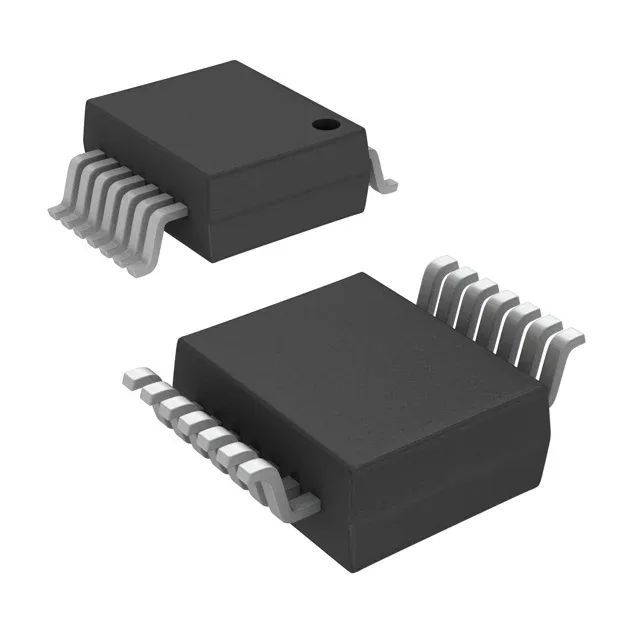
Housed in a 16-pin TFSOP (4.40 mm body width, 0.173" pitch) and also listed in TVSOP footprint, this is a fine-pitch SMD package. The 16-TVSOP supplier device package is a tighter variant — verify the PCB land pattern against the specific package drawing before layout.
New designs can specify this part without worrying about a last-time-buy window closing. For dual-sourcing resilience, the PCA9554 family includes multiple address variants (PCA9554A uses a different fixed I²C address) and package options, but the base function is consistent across the series.