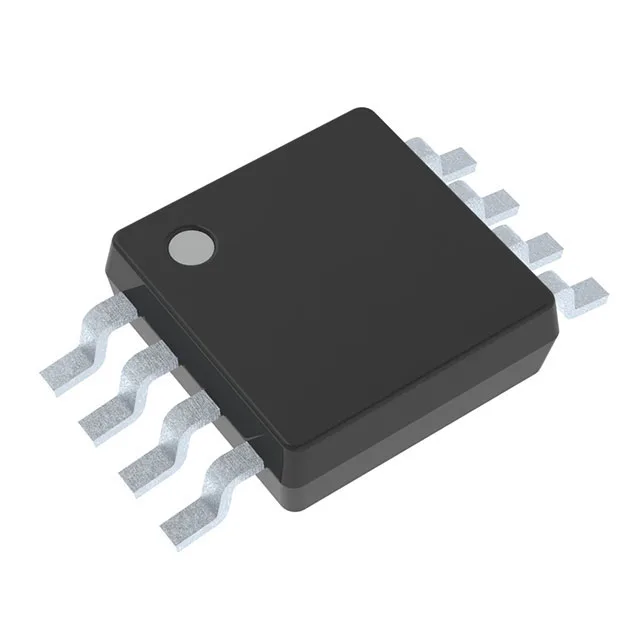
What this translator does on the board
The Texas Instruments PCA9306DCUTG4 is a single-circuit, two-channel bidirectional voltage-level translator that bridges logic families operating at different supply voltages.
Auto-direction sensing — one less signal to route
Auto-direction sensing means no direction-control pin is needed. The translator detects the data flow direction on each channel independently, which simplifies both the PCB layout — one less trace to route — and the firmware, since no GPIO is consumed for direction toggling. The output type supports both open-drain and push-pull drivers, so it works with I2C, SMBus, and GPIO-style signals where the bus is pulled high externally.
The 105°C ceiling is below under-hood requirements but fine for most factory-floor and infrastructure equipment. The VSSOP-8 package (2.30 mm body width) is small enough for dense boards but needs a steady hand or a decent reflow profile — MSL level is not in the record, but a bake before reflow is cheap insurance if the reel has been open.
This exact suffix variant (PCA9306DCUTG4) is marked obsolete by TI. There is no official TI successor listed for this specific order code, but the base PCA9306 family includes active package variants (e.g., the DCT or DCU suffixes in non-G4 RoHS versions) that may be pin-compatible — verify the package code against your board footprint before ordering a substitute.