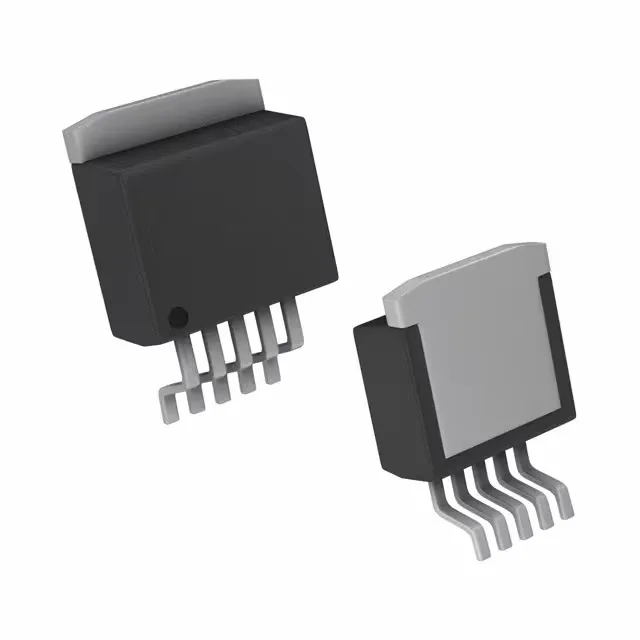
The 8 V/µs slew rate and 1.4 MHz gain-bandwidth product are modest by small-signal op-amp standards, but they are sized for the large-signal swings and capacitive loads typical of power-loop applications. The DDPAK/TO-263-5 package with its exposed thermal tab requires a PCB copper plane to pull heat away — without it, the junction temperature limits the continuous output below the 2 A ceiling.
Supply rails and output current — the BOM-fit numbers
The 20 V minimum supply span rules out 12 V or 15 V single-rail systems; this part lives in 24 V, 28 V, 48 V, or ±15 V split-rail designs. The 70 V maximum is an absolute ceiling, so a 48 V nominal rail with 10 % tolerance (52.8 V peak) leaves comfortable headroom. The 2 A output per channel is continuous, not pulsed — the thermal limit in the TO-263-5 package will typically derate the usable current above 25 °C ambient, but the rating itself tells you the silicon can source or sink 2 A into a load. The 12 mA quiescent supply current is low for a 2 A capable amplifier, which helps keep the idle dissipation manageable in multi-channel systems.
Temperature grade and industrial deployment
The 1 mV input offset and 15 pA input bias are typical for a bipolar power op-amp; the offset may need a trim network or digital calibration if the application demands DC accuracy below a few millivolts across temperature.
The TO-263-6 D²Pak (5 leads plus tab) is a surface-mount power package. Without that thermal management, the junction temperature will limit continuous output to well below 2 A. The part is also available in Cut Tape (CT) for prototype quantities, but the Tape & Reel (TR) variant is the production standard. ROHS3 compliant per the listing, so no lead-free reflow compatibility concern.