10.6 MHz GBW, 32 V/µs — signal bandwidth for multi-channel control loops
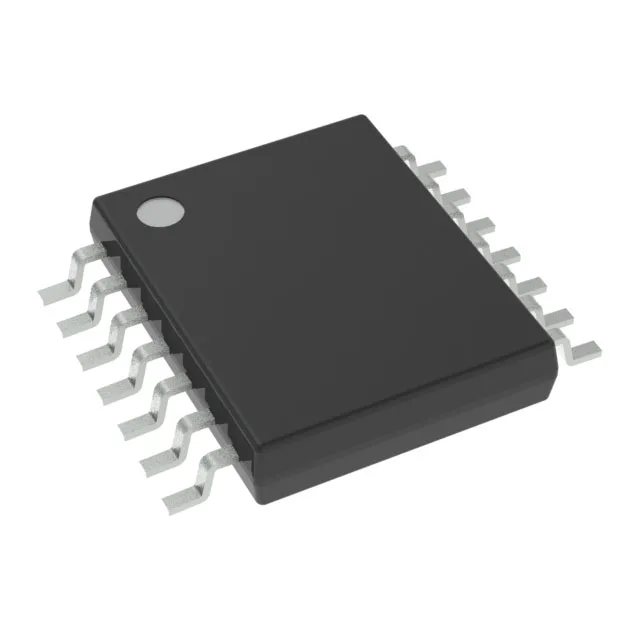
The OPA4992IPWR packs four general-purpose op-amps in a single 14-TSSOP package, each channel delivering 10.6 MHz gain-bandwidth product and a 32 V/µs slew rate. That combination supports closed-loop gains up to 10× with a 1 MHz signal bandwidth before the gain-bandwidth ceiling limits phase margin — adequate for multi-channel ADC drivers, active filters, or sensor-conditioning stages in industrial control loops. Rail-to-rail output swing means each channel can drive its full dynamic range into the ADC input or next-stage load without headroom loss, even at the 2.7 V minimum supply. The 65 mA output current per channel is enough to drive moderate capacitive loads or multiple downstream inputs without a separate buffer.
2.7 V to 40 V supply span — one BOM line for mixed-voltage boards
The 2.7 V to 40 V supply range lets this quad op-amp sit on the same BOM line whether the rail is 3.3 V, 5 V, 12 V, or 24 V. That reduces line-item count in a multi-voltage design — one qualified part number covers the low-voltage analog section and the higher-voltage actuator drive stage. Input bias current is 10 pA typical, and input offset voltage is 210 µV. For a precision sensor front-end with a 10 kΩ source impedance, the bias-current-induced offset is under 0.1 µV — negligible against the 210 µV Vos. The quad density saves board space compared to four single-channel op-amps, though the shared supply pins mean channel-to-channel isolation is limited to the device's own PSRR.
Active production, -40 to +125 °C — no end-of-life clock ticking
The 14-TSSOP package with 0.65 mm pin pitch routes cleanly on a two-layer board for most signal-conditioning layouts. Surface-mount assembly is standard; the tape-and-reel option supports automated pick-and-place. No special thermal pad or exposed paddle — the package dissipates through the leads and the board copper.