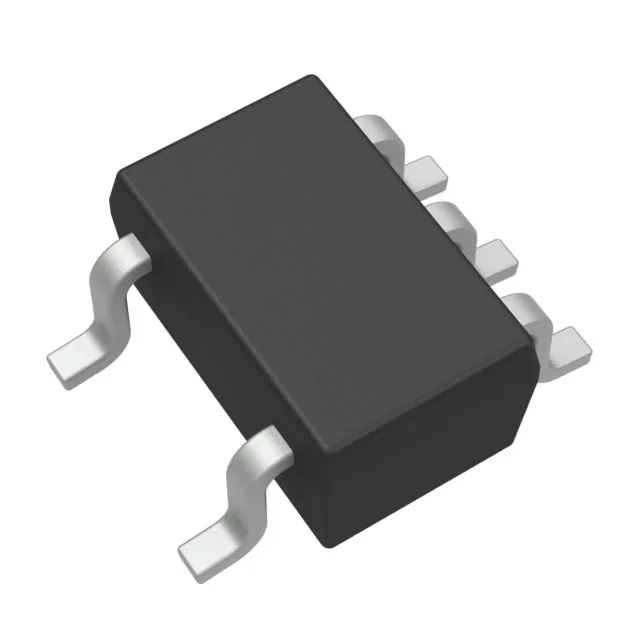
Texas Instruments OPA391DCKR — Discrete Semiconductors

OPA391DCKR General Purpose Op-Amp, 1 MHz, Rail-to-Rail

MPNOPA391DCKR
End of Life

Texas Instruments OPA391DCKR, e-trim™ series, single general-purpose op-amp in SC-70-5. 1 MHz gain bandwidth, 1 V/µs slew rate, rail-to-rail output, 15 µV input offset, 0.01 pA bias, 24 µA supply, 1.7–5.5 V supply, -40 to 125°C.

$2.29Ref. price · indicative, final on quote
Packaging5-TSSOP, SC-70-5, SOT-353
StockContact for availability
MOQ1 pcs
  • 100% new & originalTraceable channels only — no refurbs, no pulls, no remarked parts.
  • Date & lot codes on quoteStated per line before you commit; label photos on request.
  • MSL-compliant ESD packingMoisture-sealed bags with indicator cards; reels photo-verified.
  • PayPal buyer protectionPay by T/T, PayPal or Payoneer — card payments covered end to end.

Specifications

OPA391DCKR Technical Specifications
ParameterValue
Seriese-trim™
Output typeRail-to-Rail
Mounting typeSurface Mount
Amplifier typeGeneral Purpose
Voltage - input offset15 µV
Voltage - supply span5.5 V
Current - supply24µA
Current - input bias0.01 pA
Current - output (Channel)60 mA
Operating temperature-40°C ~ 125°C (TA)
Gain bandwidth product1 MHz
PackageTape & Reel (TR); Cut Tape (CT)
Slew rate1V/µs
Case5-TSSOP, SC-70-5, SOT-353
Number of circuits1

Product details

What the OPA391DCKR is and where it fits

The Texas Instruments OPA391DCKR is a single-channel, general-purpose CMOS op-amp from the e-trim™ series, housed in a 5-pin SC-70-5 (SOT-353) package for surface-mount assembly. It delivers a 1 MHz gain-bandwidth product with a 1 V/µs slew rate, rail-to-rail output swing, and an input offset voltage trimmed to 15 µV. The part operates from a 1.7 V to 5.5 V supply span, drawing only 24 µA quiescent current. With its -40°C to 125°C temperature range, this op-amp is suited for industrial sensor interfaces, battery-powered instrumentation, and portable medical devices where low power and precision matter.

Key ratings and what they mean for the BOM

The 15 µV input offset voltage is the part's precision anchor — it eliminates the need for external nulling in dc-coupled stages, saving board space and trim components. The 0.01 pA input bias current means negligible voltage drop across high source impedances, making the OPA391DCKR a natural fit for photodiode transimpedance amplifiers or electrochemical sensor front-ends. The 24 µA supply current keeps the power budget tight in always-sensing nodes; at 1.7 V minimum supply, the part can run directly from a single lithium coin cell without a boost converter. Rail-to-rail output preserves signal swing at low supply rails, critical for single-supply ADCs with full-scale inputs. The 60 mA output current capability gives enough drive for reference buffers or small relays.

Packaging and mounting

The SC-70-5 (SOT-353) footprint is a compact 5-lead package. Surface-mount assembly fits standard reflow profiles.

Lifecycle and sourcing

The OPA391DCKR is listed as Active with no end-of-life notification. That means it remains a current-production line item for new designs. For dual-sourcing flexibility, the TLV9351IDCKR is a functional alternative in the same SC-70-5 package — it offers a wider 3.5 MHz GBW but draws 600 µA supply current, so the trade-off is bandwidth versus power. The OPA391DCKR is sourced and quoted to order through independent distribution; availability and current pricing are confirmed at quote time.

Frequently asked questions

Is OPA391DCKR rail-to-rail?

Yes, the output swings rail-to-rail. The input common-mode range also extends to the rails, making this part suitable for single-supply applications down to 1.7 V.

What is the gain bandwidth product of OPA391DCKR?

The gain-bandwidth product is 1 MHz. For a closed-loop gain of 10, expect a usable bandwidth around 100 kHz; for unity-gain buffers, the full 1 MHz is available.

What is the input bias current of OPA391DCKR?

The input bias current is 0.01 pA typical. This CMOS-level bias is low enough for high-impedance sources like pH probes or photodiodes without significant voltage error.