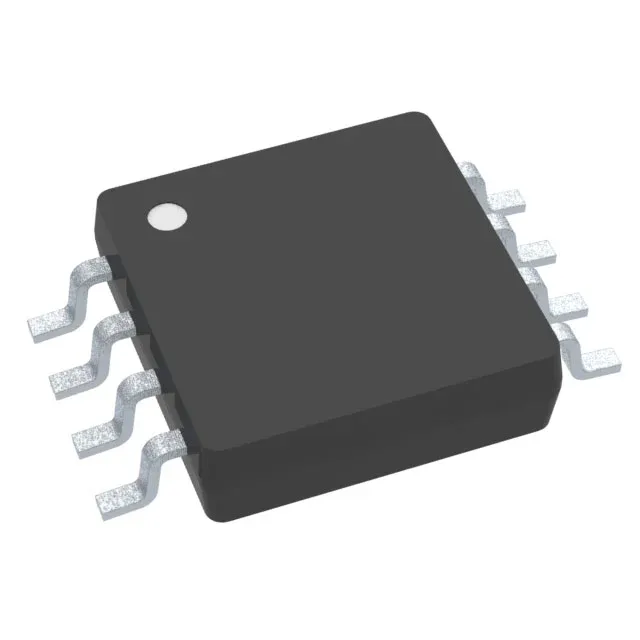
Texas Instruments OPA381AIDGKR — Logic ICs

Texas Instruments OPA381AIDGKR Transimpedance Op-Amp, 18 MHz

MPNOPA381AIDGKR
End of Life

Texas Instruments OPA381AIDGKR, Transimpedance Amplifier, 1 Circuit, 18 MHz Gain Bandwidth, 12 V/µs Slew Rate, 3 pA Input Bias, 7 µV Offset, 2.7 V to 5.5 V Supply, 8-VSSOP Package, -40°C to 125°C.

$2.27Ref. price · indicative, final on quote
Packaging8-TSSOP, 8-MSOP (0.118", 3.00mm Width)
RoHSROHS3 Compliant
Independent supplier — new & surplus stockAuthenticity-screened · ESD-safe packingListing updated Aug 2026

Specifications

OPA381AIDGKR specifications
ParameterValue
MountingSurface Mount
Amplifier typeTransimpedance
Voltage - input offset7 µV
Voltage - supply span5.5 V
Current - supply800µA
Current - input bias3 pA
Current - output (Channel)10 mA
Operating temperature-40°C ~ 125°C
Gain bandwidth product18 MHz
PackageTape & Reel (TR); Cut Tape (CT)
Slew rate12V/µs
Case8-TSSOP, 8-MSOP (0.118\", 3.00mm Width)
Number of circuits1

Product details

18 MHz transimpedance amplifier for photodiode front-ends

Its 18 MHz gain-bandwidth product and 12 V/µs slew rate support fast optical pulse detection, while the 3 pA input bias current and 7 µV input offset voltage minimize DC error in low-light measurements. Applications include optical sensors, medical diagnostics, and industrial photodetection chains.

3 pA input bias — why it matters for photodiode interfaces

In a transimpedance configuration, the input bias current flows through the feedback resistor, creating a DC offset voltage at the output. At 3 pA, the OPA381AIDGKR keeps this error negligible even with large feedback resistors used in low-light applications. Compare this to a general-purpose op-amp with nanoamp bias, which would swamp a small photocurrent signal. The 7 µV input offset voltage further tightens the baseline accuracy. For a photodiode producing 1 nA through a 1 MΩ feedback resistor, the signal is 1 mV — the offset contribution is less than 1% of that.

8-VSSOP package — footprint and layout notes

The small footprint suits space-constrained optical modules.

Frequently asked questions

Is OPA381AIDGKR suitable for low-light photodetection?

Yes. The combination of 3 pA input bias current, 7 µV offset, and 18 MHz gain-bandwidth makes it well-suited for low-light photodiode front-ends where signal levels are small and bandwidth is needed for pulse detection.

Does OPA381AIDGKR have a shutdown mode?

The evidence does not list a shutdown or power-down feature. The part draws a continuous 800 µA supply current when active.