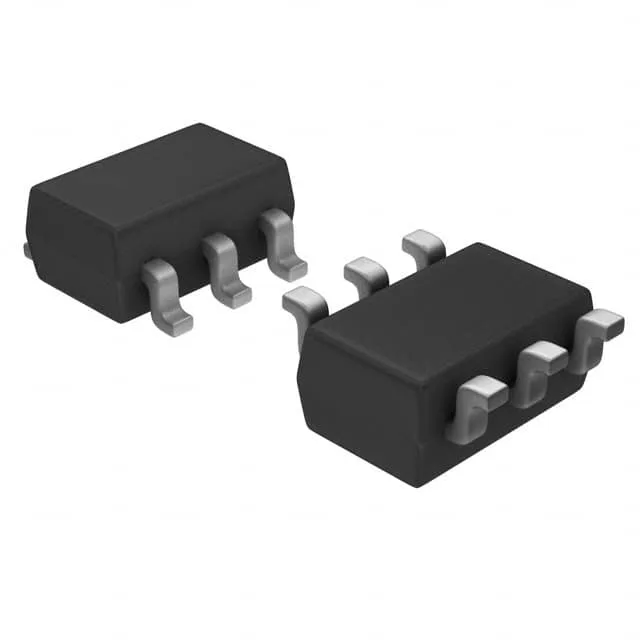
Zero-drift precision in a SOT-23-6 package
Its key differentiator is a 1 µV typical input offset voltage — two orders of magnitude lower than a general-purpose op-amp — which eliminates the need for manual offset trim or software calibration in DC-precise circuits like current-sense amplifiers, thermocouple interfaces, and bridge transducers.
Speed versus power — 2 MHz GBW at 285 µA
The 285 µA supply current suits battery-operated or channel-dense designs where every microamp counts. For a faster zero-drift amp, you would trade supply current for bandwidth; this part picks the low-power side of that trade.
The input bias current of 70 pA keeps errors negligible even with high-impedance sources like pH probes or photodiode amplifiers.