10 MHz GBW at 400 µA — the power-speed trade-off that matters
The supply span runs from 1.8 V minimum to 5.5 V maximum. That 1.8 V floor is the key spec: it lets this part operate directly from a single lithium-ion cell (nominal 3.6 V, down to 2.7 V under load) or a two-cell alkaline stack (3.0 V fresh, 1.8 V dead). Many general-purpose op-amps in this speed class bottom out at 2.7 V or 3.0 V, so the OPA316IDBVR earns its place in portable, battery-powered, and energy-harvesting designs where the rail sags below 2.5 V.
The operating temperature range covers -40°C to 125°C, which qualifies this part for under-hood automotive, factory-floor sensor interfaces, outdoor telecom cabinets, and engine-bay electronics. The 125°C upper limit is the threshold where many commercial-grade (85°C) op-amps start to drift or fail; the OPA316IDBVR keeps its input bias current (5 pA typical) and offset voltage (500 µV max) within spec across that full span.
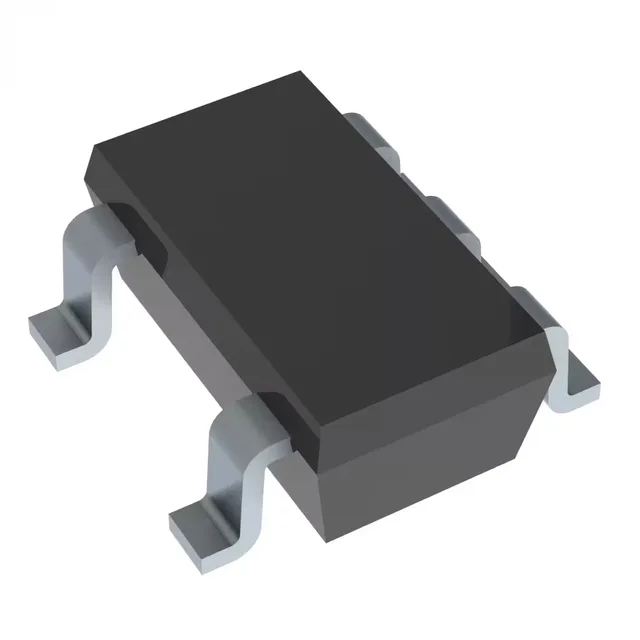
SOT-23-5 package — fits tight layouts, but plan the reflow profile
The small footprint means the thermal pad is absent — all heat dissipates through the leads and the PCB copper. For continuous operation near the 125°C limit, ensure the board has adequate copper pour under the part. The tape-and-reel and cut-tape options cover both production reels and prototype quantities.
For the spare-parts storeroom, this means you can stock the reels without worrying about a sudden obsolescence-driven write-off. Store the reels dry — the SOT-23-5 package is MSL 1 (no bake required before reflow if the bag seal is intact), but once the bag is opened, standard moisture-barrier storage is still good practice.