Its 600 MHz -3dB bandwidth and 3500 V/µs slew rate target high-speed signal conditioning, video distribution, and communications line-driving where a voltage-feedback amp would struggle to maintain slew rate at higher gains. Each channel delivers 700 mA of output current, which suits driving low-impedance loads like 50 Ω or 75 Ω cables without an external buffer stage. The supply span runs from 7 V to 13 V, so it works off standard ±5 V or single 12 V rails.
A current-feedback architecture decouples gain from slew rate, so the 3500 V/µs figure holds across the full gain range — unlike a voltage-feedback amp where slew rate drops as gain increases. That makes this part a clean choice for pulse amplifiers, arbitrary waveform generators, or any signal chain that needs a fast edge with gain. The 600 MHz -3dB bandwidth is the small-signal figure; with the 700 mA output stage, large-signal bandwidth will be lower but still well above 100 MHz for a 2 Vpp swing into 50 Ω. Budget the 32 mA per channel supply current into the rail design — 64 mA total for both channels, plus the load current.
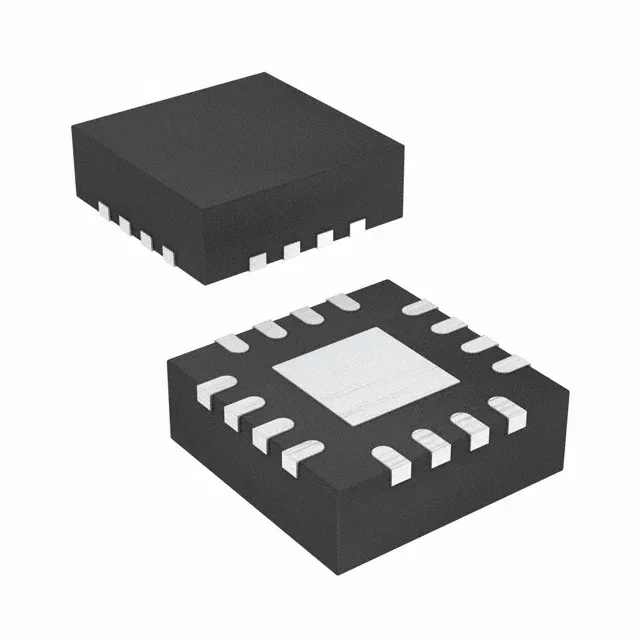
The 700 mA per channel output can dissipate several watts into the load, and without the pad soldered to a copper plane the junction temperature climbs quickly above 85°C ambient.