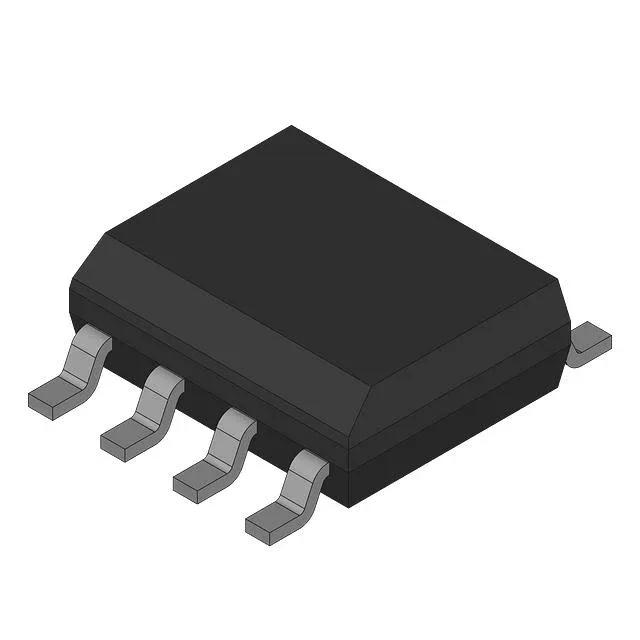
Dual voltage-feedback op-amp with 350 mA output drive
The OPA2613IDR: It delivers a 230 MHz -3dB bandwidth and a 70 V/µs slew rate, with each channel capable of sourcing or sinking 350 mA. The supply range spans 5 V to 12 V, and quiescent current is 12 mA per channel. This combination of wide bandwidth, high slew rate, and substantial output current makes it suited for driving low-impedance loads such as video cables, transformers, or ADC inputs in communications and test equipment.
The 230 MHz -3dB bandwidth and 70 V/µs slew rate support composite video and high-speed data converters. Input bias current is 6 µA, input offset voltage is 200 µV, and gain-bandwidth product is 125 MHz.
350 mA output current — driving cables and low-impedance loads
Each channel can deliver 350 mA continuously. The 12 mA per-channel supply current is modest for this drive capability, so a dual-channel design draws 24 mA quiescent total. Thermal dissipation in the 8-SOIC package is manageable at moderate signal levels, but sustained DC near the maximum output current warrants attention to PCB copper area for heat spreading.
Supply voltage range 5 V to 12 V
The 5 V minimum means it cannot run from a 3.3 V rail — designs using 3.3 V logic need a separate supply or a different op-amp. The 12 V maximum provides headroom for larger output swings when driving high-impedance loads.