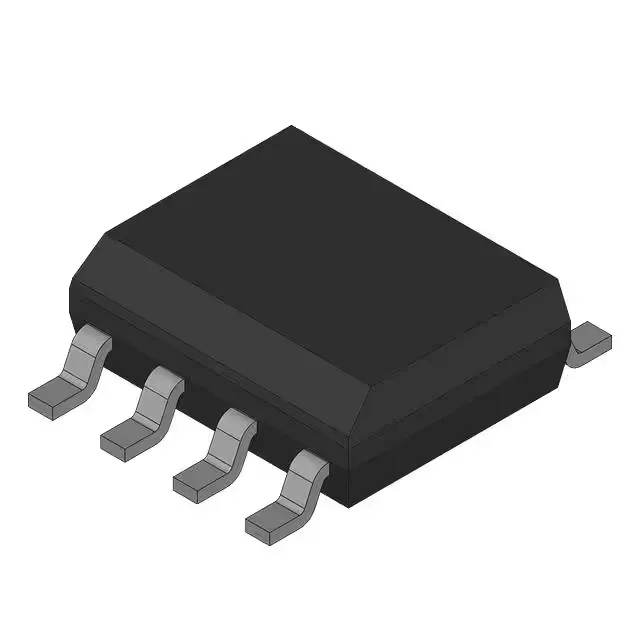
Texas Instruments OPA241UAG4 — Logic ICs

OPA241UAG4 General Purpose Op-Amp, 35 kHz

MPNOPA241UAG4
End of Life

Texas Instruments OPA241, General Purpose Amplifier, 1 Circuit, Rail-to-Rail Output, 35 kHz Gain Bandwidth, 0.01 V/µs Slew Rate, 27 µA Supply, 8-SOIC Package, -40°C to 85°C.

$2.25Ref. price · indicative, final on quote
Packaging8-SOIC (0.154", 3.90mm Width)
Independent supplier — new & surplus stockAuthenticity-screened · ESD-safe packingListing updated Aug 2026

Specifications

OPA241UAG4 specifications
ParameterValue
Output typeRail-to-Rail
MountingSurface Mount
Amplifier typeGeneral Purpose
Voltage - input offset100 µV
Voltage - supply span2.7 V
Current - supply27µA
Current - input bias4 nA
Current - output (Channel)21 mA
Operating temperature-40°C ~ 85°C
Gain bandwidth product35 kHz
PackageBulk
Slew rate0.01V/µs
Case8-SOIC (0.154\", 3.90mm Width)
Number of circuits1

Product details

27 µA supply — the spec that defines the part

The OPA241UAG4 draws 27 µA supply current, with 35 kHz gain-bandwidth product and 0.01 V/µs slew rate. Supply span is 2.7 V to 36 V.

Input offset and bias — what to expect for DC accuracy

Input offset is 100 µV, input bias is 4 nA, and output current is 21 mA.

Package, temperature grade, and lifecycle

The OPA241UAG4 is supplied in an 8-SOIC package with a surface-mount footprint.

No stock or lead-time number is published here because the supply picture changes — the buyer should request a quote for the quantity and required date code. The Active lifecycle means there is no urgency driven by a phase-out, but the part is not a high-volume commodity either, so lead times can vary.

Frequently asked questions

Can I use the OPA241UAG4 for low-power sensor signal conditioning?

Yes — that is exactly what this part is designed for. The 27 µA supply current makes it a strong candidate for battery-powered or loop-powered sensor front-ends. The 35 kHz gain-bandwidth and 0.01 V/µs slew rate limit it to DC and low-frequency signals, so it fits thermocouple, RTD, strain-gauge, and bridge amplifier applications where bandwidth is tens of hertz. The rail-to-rail output and wide supply range (2.7 V to 36 V) add flexibility for single-supply designs.