The 13 V/µs slew rate gives this op-amp enough speed to reproduce a 20 kHz sine wave at full output swing without visible distortion — a common benchmark for audio line-level stages. The 10 MHz gain-bandwidth product means you can close the loop for a gain of 10 and still have 1 MHz of small-signal bandwidth, which covers most audio and low-frequency instrumentation filters. Input bias current is 500 nA and input offset voltage is 500 µV — both typical for a general-purpose bipolar op-amp of this generation. For DC-coupled circuits, the offset may need a trim or a servo loop if the application demands sub-millivolt accuracy.
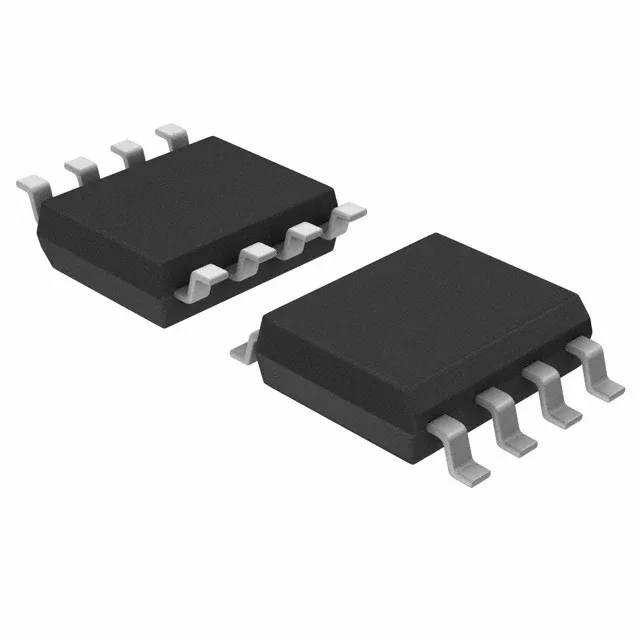
Texas Instruments NE5534PSRE4 Op-Amp, 10 MHz, 13V/µs
MPNNE5534PSRE4
Obsolete
Texas Instruments NE5534PSRE4, General Purpose Amplifier, 1 Circuit, 13V/µs Slew Rate, 10 MHz Gain Bandwidth, 4mA Supply, 0°C~70°C, 8-SOIC.
Sourced new & surplus through independent channelsAuthenticity-screened · ESD-safe packingListing updated Jul 2026
Specifications
| Parameter | Value |
|---|---|
| Mounting | Surface Mount |
| Amplifier type | General Purpose |
| Voltage - input offset | 500 µV |
| Voltage - supply span | 30 V |
| Current - supply | 4mA |
| Current - input bias | 500 nA |
| Current - output (Channel) | 38 mA |
| Operating temperature | 0°C~70°C |
| Gain bandwidth product | 10 MHz |
| Package | Tape & Reel (TR) |
| Slew rate | 13V/µs |
| Case | 8-SOIC (0.209\", 5.30mm Width) |
| Number of circuits | 1 |
Product details
Frequently asked questions
What is the replacement for NE5534PSRE4?
Texas Instruments has not published an official replacement for the NE5534PSRE4. The closest functional alternative within the same family is the NE5534P (DIP-8 through-hole) or the NE5534DR (SOIC-8), but these are also obsolete or nearing end-of-life. For a pin-compatible modern substitute, consider the OPA1642 or OPA2134 — both are audio-grade op-amps in SOIC-8 with similar or better slew rate and bandwidth, but verify the pinout and supply range against your board.