4 MHz ceiling, ROMless architecture — what it means for BOM fit
The MSP430L092SPWR runs a 16-bit MSP430 CPU16 core at 4 MHz — this is the instruction throughput ceiling for the entire application, not a turbo mode. With 2K x 8 of RAM and zero on-chip program memory (ROMless), every byte of firmware must reside in external serial or parallel non-volatile memory and be loaded at boot or fetched on demand. That external memory access adds latency and consumes I/O pins, so the 4 MHz ceiling is effectively lower once bus cycles are factored in. Supply voltage spans 0.9 V to 1.65 V, which means this part runs directly from a single alkaline or NiMH cell without a boost converter. The 11 available I/O pins must handle both the external memory interface and any sensor/actuator signals — a tight budget that forces a trade-off between peripheral count and memory bus width.
On-chip analog and peripheral set
An 8-channel, 8-bit ADC and a single 8-bit DAC are integrated — sufficient for low-resolution sensor readout or simple control-loop feedback, but not for precision measurement. The brown-out detect and POR ensure the core resets cleanly when the battery voltage dips below the operating threshold; the PWM module can drive a small load or generate a tone without an external timer. Operating temperature is specified from 0°C to 50°C — this is a commercial-grade part for indoor, climate-controlled equipment.
Package and board integration
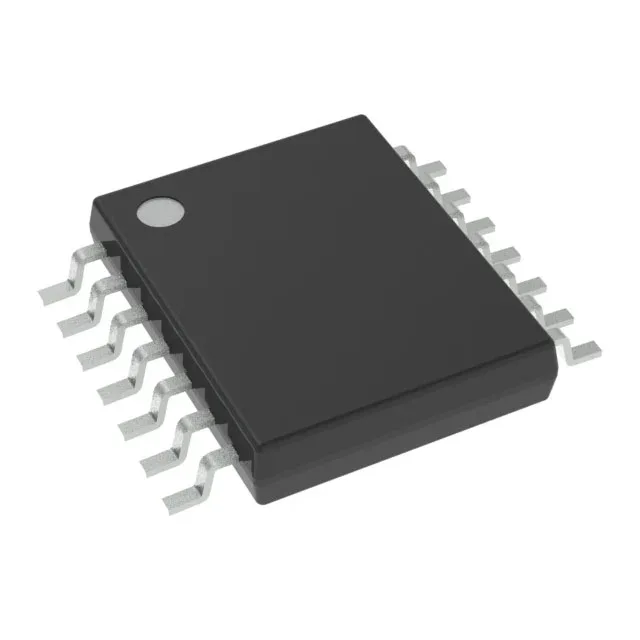
Housed in a 14-TSSOP package (4.40 mm width, 0.65 mm pitch) with surface-mount termination. The supplier device package is also 14-TSSOP — no thermal pad or exposed paddle to worry about. Cut Tape works for prototyping or low-volume builds.
It is ROHS3 compliant, meeting the current EU restriction on hazardous substances.