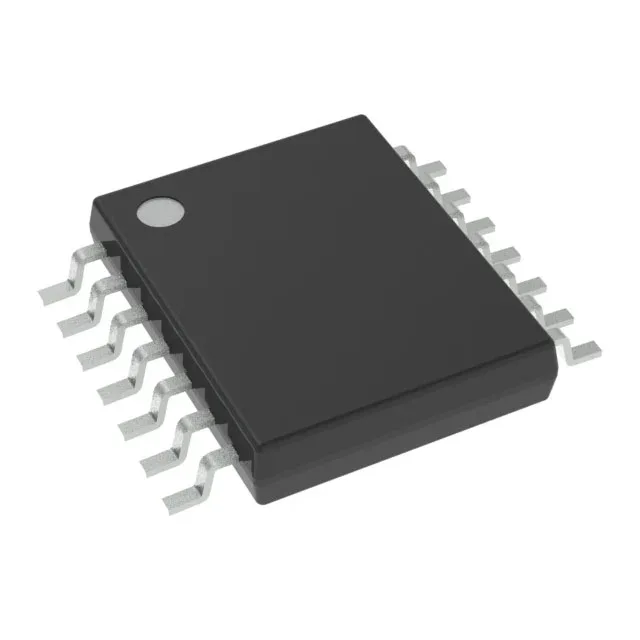
Ultra-low-voltage MCU for single-cell and energy-harvesting designs
It runs at 4 MHz and operates from a supply range of 0.9 V to 1.65 V — low enough to run directly from a single alkaline cell or a coin cell without a boost converter. The part is ROMless, meaning program code must be stored in external memory and loaded into the 2K x 8 RAM for execution. This architecture suits designs where the firmware is small, the code is loaded at boot from a serial EEPROM or host processor, or where the MCU acts as a programmable state machine under external control.
0.9 V to 1.65 V supply — what it enables
The 0.9 V to 1.65 V supply range is the standout feature of this part. Most MCUs require at least 1.8 V or 2.7 V; the MSP430L092SPW keeps running down to 0.9 V, which is below the end-of-life voltage of a single alkaline cell (~1.0 V). That eliminates the need for a boost regulator in battery-powered or energy-harvesting systems, saving board space and quiescent current. The trade-off is the ROMless architecture — there is no on-chip Flash or OTP, so the system designer must provide external nonvolatile storage and a boot mechanism.
Peripherals and I/O in a 14-pin TSSOP
It provides 11 general-purpose I/O pins and integrates an 8-channel 8-bit ADC and a single 8-bit DAC.
For new designs that can work with the ROMless architecture and the 0 °C to 50 °C temperature range, this part is a clean choice without supply-chain risk.