What this 16-bit MCU brings to a metering or sensor design
Those converters are aimed at energy metering, flow sensing, and precision instrumentation where you need direct sensor digitisation without an external ADC.
The 24-bit sigma-delta ADC pair — why it matters for the BOM
The dual 24-bit sigma-delta ADCs are the reason you pick this part over a plain MSP430G2xxx. They handle direct connection to current transformers, shunt resistors, or bridge sensors, which means you can drop an external ADC from the BOM. The converters are built for low-frequency, high-resolution measurement — think 50/60 Hz mains metering or strain-gauge readout — not audio-rate sampling. If your application needs two synchronised measurement channels (voltage and current in a single-phase meter, for instance), this part covers it in one package.
Connectivity and I/O for a sensor hub
The IrDA support is a niche bonus if you need optical isolation on a meter pulse output. The PWM and watchdog timer are standard for control loops and system supervision. Brown-out detection is built in, which saves an external reset supervisor on the board.
Package and board-fit notes for the 32-VQFN
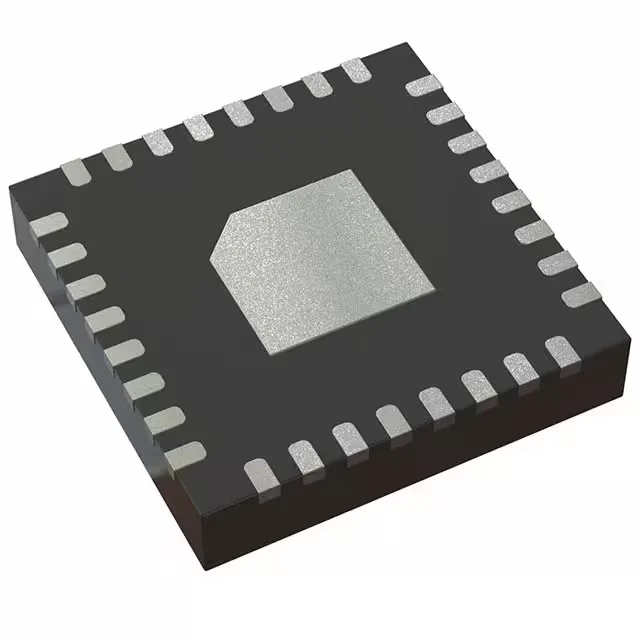
The part comes in a 32-VFQFN with an exposed pad (5x5 mm body). The package is surface-mount only, so no socketed field swap; plan for reflow assembly. The supplier device package is 32-VQFN (5x5), which is a common footprint across the MSP430I2xx family, so a board layout can be shared across density variants.