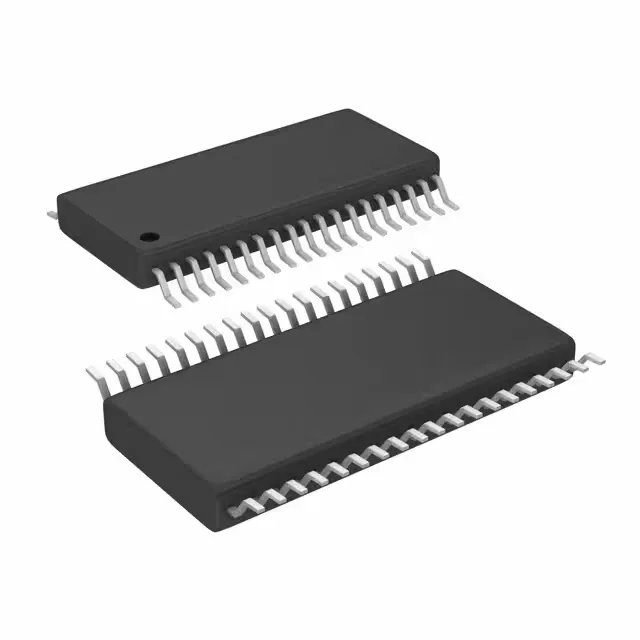
The MSP430G2955IDA38R: The 16 MHz core speed is a deliberate trade-off for low active power — it handles sensor polling, serial protocol handling, and simple control loops without the overhead of a 32-bit ARM core. The 56 KB Flash is generous for this class; you can fit a modest scheduler, a command parser, and several application states. The 4 KB RAM is the tighter resource — plan for a small frame buffer or a ring buffer for UART data, but don't expect to run a full TCP/IP stack in this footprint.
32 I/O, 12-channel 10-bit ADC — peripheral count for multi-sensor nodes
With 32 I/O pins and a 12-channel 10-bit ADC, this MCU can monitor a dozen analog sensors (temperature, voltage dividers, current shunts) while still having digital pins left for keypad scanning, LED driving, or relay control. The 10-bit resolution is adequate for 0.1% accuracy on a 3.3 V reference — fine for battery monitoring or thermostat setpoint detection, but not for precision weigh scales.
Serial connectivity: UART, SPI, I²C, LIN, IrDA
The MSP430G2955IDA38R supports UART, SPI, I²C, LIN, and IrDA through its serial communication interface. The UART support is confirmed — you can connect a GPS module, a Bluetooth HCI UART, or an RS-485 transceiver. LIN and IrDA are niche but useful: LIN for automotive body electronics (door modules, seat controllers) and IrDA for contactless data transfer in medical or industrial handhelds. The SCI and USART modules give flexibility for legacy synchronous protocols.