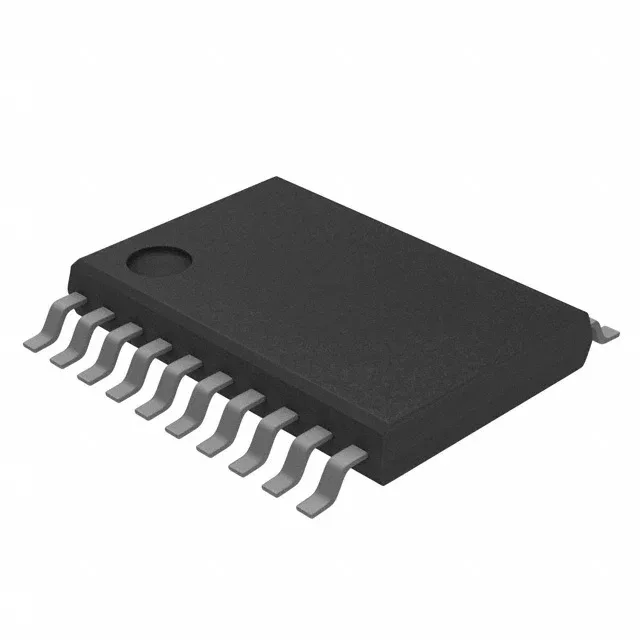
Texas Instruments MSP430G2513IPW20R — Microcontrollers & Processors (MCU / MPU / DSP)

TI MSP430G2513IPW20R 16-bit MCU, 16 MHz, 16 KB Flash

MPNMSP430G2513IPW20R
Active

Texas Instruments MSP430G2xx series, MSP430G2513IPW20R, 16-Bit 16MHz MCU, 16KB (16K x 8) FLASH, 512 x 8 RAM, I²C/SPI/UART, 1.8V~3.6V, -40°C~85°C, 20-TSSOP.

$3.5300Ref. price · indicative, final on quote
Independent supplier — new & surplus stockAuthenticity-screened · ESD-safe packingListing updated Jul 2026

Specifications

MSP430G2513IPW20R specifications
ParameterValue
SeriesMSP430G2xx
MountingSurface Mount
Oscillator typeInternal
Program memory typeFLASH
Voltage - supply (Vcc (Vdd))1.8V ~ 3.6V
Operating temperature-40°C~85°C(TA)
Speed16MHz
PackageTape & Reel (TR); Cut Tape (CT)
RAM size512 x 8
Core size16-Bit
PeripheralsBrown-out Detect/Reset, DMA, POR, PWM, WDT
ConnectivityI²C, IrDA, LINbus, SCI, SPI, UART/USART
Number of i (O)16
Core processorMSP430 CPU16
Case20-TSSOP (0.173\", 4.40mm Width)
Program memory size16KB (16K x 8)

Product details

The 16-bit RISC CPU16 core gives single-cycle access to the register file, so interrupt latency stays predictable for real-time control loops. The 16 KB Flash is sized for moderate firmware — sensor fusion, motor commutation tables, or a Modbus stack — without needing external memory.

Peripherals and connectivity for sensor and actuator nodes

With 16 I/O lines in the 20-TSSOP package, you get about a dozen usable GPIOs after the serial interfaces are assigned.

Frequently asked questions

What is the difference between MSP430G2513IPW20R and MSP430G2553?

The MSP430G2553 is a higher-density sibling in the same MSP430G2xx family. The G2553 offers 16 KB Flash and 512 B RAM like the G2513, but adds a 16-bit hardware multiplier and a larger peripheral set including a comparator and a second USCI module. The G2513 omits the hardware multiplier and the second USCI, which reduces die cost for applications that do not need those blocks. Both are pin-compatible in the 20-TSSOP footprint, so a board designed for one can accept the other with a firmware change.