What this MSP430G2452IPW20R brings to a sensor-node BOM
It runs at 16MHz from a 1.8V to 3.6V supply, with an internal oscillator that saves an external crystal on low-cost boards. The peripheral set includes an 8-channel 10-bit ADC, a USI module that handles both I²C and SPI, plus a DMA controller and a PWM timer — enough to run a small sensor-fusion loop or a single-ended data-acquisition channel without external glue.
16MHz core and 8KB Flash — what the memory budget really means
At 16MHz the MSP430 CPU16 executes most instructions in a single cycle, so a tight sensor-polling loop or a bit-banged UART at 115200 baud is manageable. The 8KB Flash is the hard constraint: a typical bootloader plus a TI driverlib stub leaves about 5KB for application code, which is comfortable for a single I²C temperature sensor with logging, but tight if you need a full USB stack or floating-point math in software. The 256-byte RAM limits stack depth — keep interrupt nesting shallow and allocate buffers sparingly, or the linker will tell you at build time.
The MSP430G2xx family has broad distribution support, and the part is ROHS3 compliant.
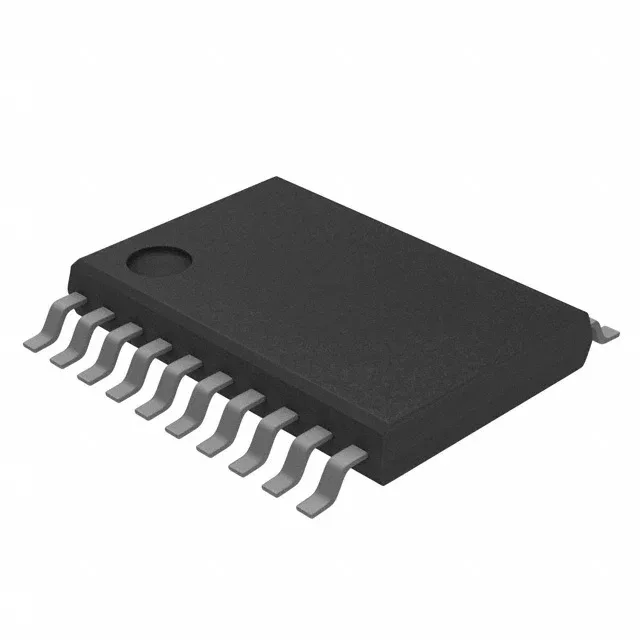
Package and footprint: 20-TSSOP
The 20-TSSOP body measures 4.40mm wide (0.173") with a 0.65mm pin pitch — a compact footprint that fits on two-layer boards without micro-vias.