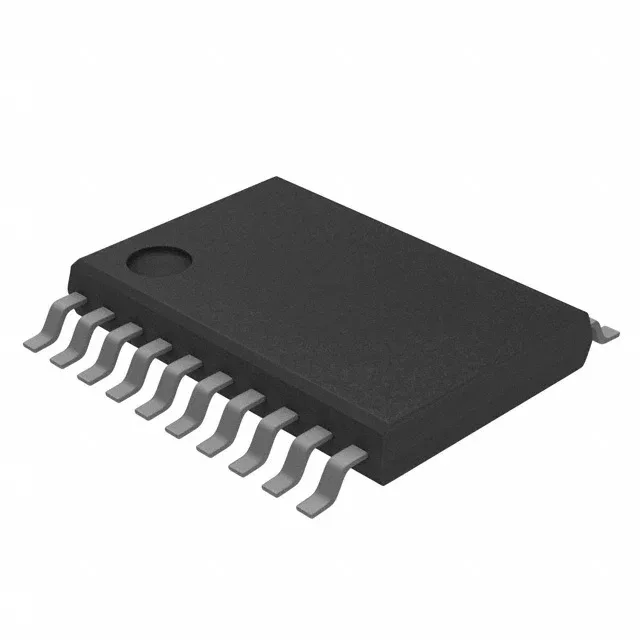
Texas Instruments MSP430G2433IPW20 — Microcontrollers & Processors (MCU / MPU / DSP)

MSP430G2433IPW20 16-bit MCU, 16 MHz, 8 KB Flash, 20-TSSOP

MPNMSP430G2433IPW20
Active

Texas Instruments MSP430G2xx series, MSP430G2433IPW20, 16-bit MCU, 16MHz, 8KB Flash, 512 x 8 RAM, 1.8V-3.6V, 20-TSSOP, -40°C to 85°C.

$3.5200Ref. price · indicative, final on quote
Packaging20-TSSOP (0.173", 4.40mm Width)
RoHSROHS3 Compliant
SeriesMSP430G2xx
Independent supplier — new & surplus stockAuthenticity-screened · ESD-safe packingListing updated Aug 2026

Specifications

MSP430G2433IPW20 specifications
ParameterValue
SeriesMSP430G2xx
MountingSurface Mount
Oscillator typeInternal
Program memory typeFLASH
Voltage - supply (Vcc (Vdd))1.8V ~ 3.6V
Operating temperature-40°C~85°C(TA)
Speed16MHz
PackageTube
RAM size512 x 8
Core size16-Bit
PeripheralsBrown-out Detect/Reset, PWM, WDT
ConnectivityI²C, IrDA, LINbus, SCI, SPI, UART/USART
Number of i (O)16
Core processorMSP430 CPU16
Case20-TSSOP (0.173\", 4.40mm Width)
Data convertersA/D 8x10b
Program memory size8KB (8K x 8)

Product details

The 512-byte RAM and 8 KB Flash are modest, so firmware must be lean — typical applications include temperature logging, IR remote decoding, and I²C sensor readout where the low active current and multiple sleep modes stretch battery life.

The 8-channel 10-bit ADC samples analog inputs like thermistors or potentiometers without an external converter.

Active lifecycle — no EOL risk for production builds

That means no last-time-buy window to manage, no forced redesign for a replacement. For dual-sourcing or higher-performance needs, the MSP430G2553 is a common sibling in the same G2xx family with more Flash and RAM, but the G2433 remains a cost-optimized entry point for 8 KB designs.

16 I/O and 20-TSSOP — layout and rework notes

The 0.65 mm pitch is fine enough for a two-layer board but needs careful soldermask definition.

Frequently asked questions

Can MSP430G2433IPW20 be used in battery-powered applications?

Yes. The 16-bit MSP430 core is designed for low power consumption, with multiple sleep modes that draw microamps, making it a good fit for battery-powered sensor nodes and portable devices.

What programming tools support MSP430G2433IPW20?

The MSP430G2433IPW20 is programmed and debugged via the standard Spy-Bi-Wire (SBW) two-wire interface, supported by TI's MSP-FET programmer, the LaunchPad development boards, and third-party tools like the Segger J-Link. The SBW interface uses the TEST and RST pins, so reserve those on your PCB.

What is the difference between MSP430G2433IPW20 and MSP430G2553?

The MSP430G2553 is a higher-density sibling in the same G2xx family, offering up to 16 KB Flash and 512 bytes RAM versus the G2433's 8 KB Flash and 512 x 8 RAM. The G2553 also adds a second 16-bit timer and a comparator. Both are pin-compatible in the 20-TSSOP package, so a firmware-only migration is possible if the extra memory is needed.