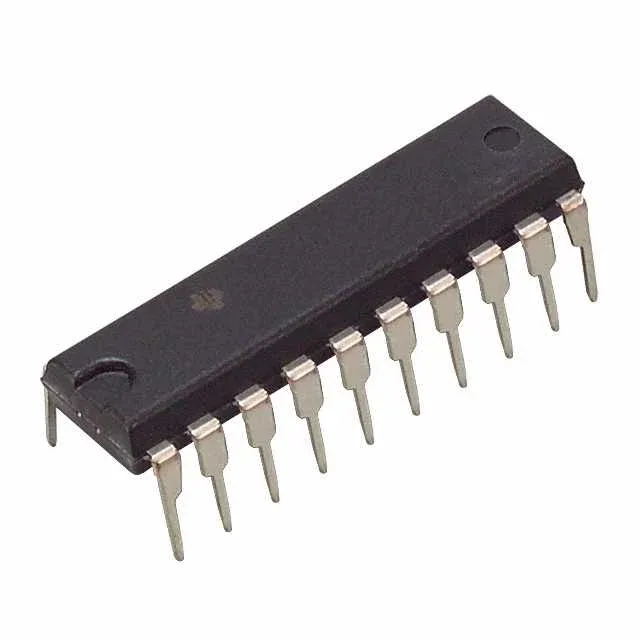
Texas Instruments MSP430G2432IN20 — Microcontrollers & Processors (MCU / MPU / DSP)

Texas Instruments MSP430G2432IN20 16-Bit MCU, 16MHz

MPNMSP430G2432IN20
Active

Texas Instruments MSP430G2xx series 16-bit MCU, MSP430G2432IN20, 16MHz, 8KB Flash, 256 x 8 RAM, 16 I/O, I²C/SPI/USI, A/D 8x10b, 1.8V~3.6V, -40°C~85°C, 20-DIP.

$3.3000Ref. price · indicative, final on quote
Packaging20-DIP (0.300", 7.62mm)
RoHSROHS3 Compliant
SeriesMSP430G2xx
Independent supplier — new & surplus stockAuthenticity-screened · ESD-safe packingListing updated Aug 2026

Specifications

MSP430G2432IN20 specifications
ParameterValue
SeriesMSP430G2xx
MountingThrough Hole
Oscillator typeInternal
Program memory typeFLASH
Voltage - supply (Vcc (Vdd))1.8V ~ 3.6V
Operating temperature-40°C~85°C(TA)
Speed16MHz
PackageTube
RAM size256 x 8
Core size16-Bit
PeripheralsBrown-out Detect/Reset, DMA, POR, PWM, WDT
ConnectivityI²C, SPI, USI
Number of i (O)16
Core processorMSP430 CPU16
Case20-DIP (0.300\", 7.62mm)
Data convertersA/D 8x10b
Program memory size8KB (8K x 8)

Product details

16 MHz clock, 8 KB Flash, 256 B RAM — sizing the firmware boundary

The 16 MHz CPU speed is the ceiling for the internal oscillator; you can run it slower to save current, but the core MIPS budget caps at roughly 16 MIPS. The 8 KB Flash is the entire program store — no external memory interface, so the firmware image must fit entirely in that space. The 256-byte RAM is the working set: stack, global variables, and a small FIFO. That rules out any application needing a large lookup table, a real-time OS with multiple task stacks, or a TCP/IP stack. For a single-ended UART polling loop or an I²C sensor readout, it's enough — but the linker map needs watching.

Peripherals and connectivity on a 20-pin DIP

The internal oscillator means no external crystal is needed for basic operation — useful for a minimal BOM count in a low-cost sensor node.

Frequently asked questions

What is the difference between the MSP430G2432 and the MSP430G2452?

The MSP430G2452 is a pin-compatible sibling in the same MSP430G2xx family. The primary difference is program memory: the G2432 has 8 KB Flash, while the G2452 carries 8 KB as well (same density). The real differentiator is the peripheral set — the G2452 adds a comparator and a higher-resolution ADC in some variants. Check the specific G2452 order code's datasheet for the exact ADC and comparator availability before substituting.

Is the MSP430G2432IN20 5V tolerant?

No. Driving a 5 V logic signal into any pin risks damage. Level shifting is required when interfacing with 5 V peripherals.