What this MSP430G2412IPW20 brings to a BOM
16 MHz core — timing budget for the firmware
At 16 MHz the CPU16 core executes most instructions in a single clock cycle, so the effective throughput is higher than the raw MHz suggests. That speed, combined with the DMA controller, offloads data transfers from the CPU — useful when servicing I²C or SPI traffic without dropping samples.
8 KB Flash, 256 bytes RAM — sizing the firmware footprint
The 256-byte RAM is the tighter constraint: stack and global variables must fit, so any substantial data buffer or lookup table lives in Flash and is copied to RAM only when needed. Designs that log data or run a command-line interface should budget RAM carefully or move to a higher-density MSP430G2xx variant.
The wide supply range lets this MCU run directly from a single Li-ion cell (3.0 V to 4.2 V) or two alkaline cells (down to 1.8 V). No external regulator is needed for the core, which simplifies the power tree and saves board space. The brown-out detect and POR ensure clean startup and reset as the battery discharges — a reliability advantage for portable instruments and wireless sensors.
20-TSSOP package — footprint and reflow
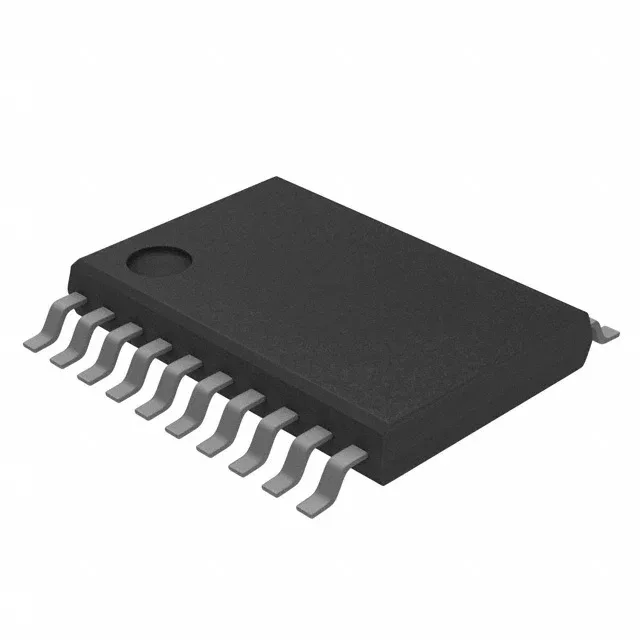
The 20-pin TSSOP (4.4 mm width) is a compact surface-mount package suited for two-layer PCBs. The 0.65 mm pitch requires a fine-pitch soldering profile, but standard reflow ovens handle it. The supplier device package is 20-TSSOP; the package / case is 20-TSSOP (0.173", 4.40 mm width).