Memory and timing — what the numbers mean
The 8 KB Flash is the program store — no external memory bus, so firmware must fit within that footprint. For a typical sensor node reading a temperature probe and reporting over I²C every second, that is plenty. The 512 bytes of RAM (organized as 512 x 8) is the working data space: stack, global variables, and buffers. If your application uses a large lookup table or a long UART buffer, you will hit the ceiling fast. The 16 MHz core clock is fast enough for most low-power polling loops and moderate data rates, but there is no hardware multiplier or FPU — heavy math takes multiple cycles.
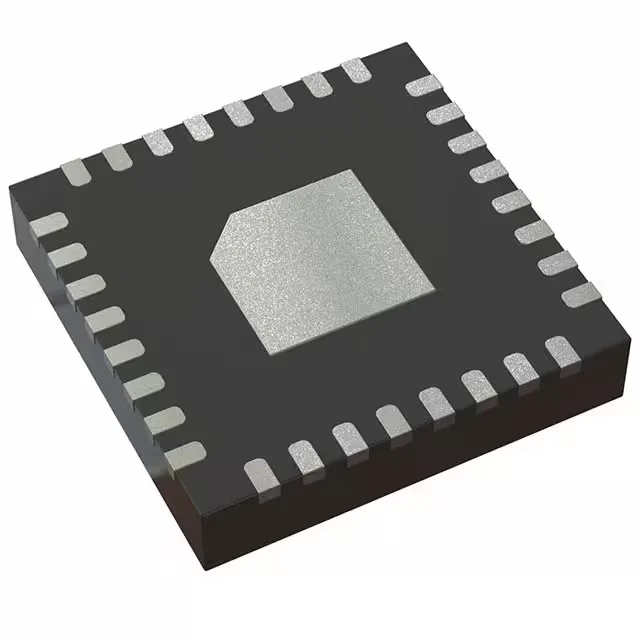
This part comes in a 32-VFQFN Exposed Pad package (5 mm x 5 mm body, supplier package 32-VQFN). Surface-mount only, so no socketed field swap without a hot-air station.