4 KB Flash and 256 bytes RAM — sizing the firmware footprint
The 16 MHz core speed gives enough throughput for real-time tasks like reading an 8-channel 10-bit ADC at moderate rates, but the 256-byte RAM ceiling means you'll be managing stack depth and buffer sizes carefully; any significant data buffering will push you toward a larger sibling in the G2xx family.
Supply range and I/O — battery-friendly flexibility
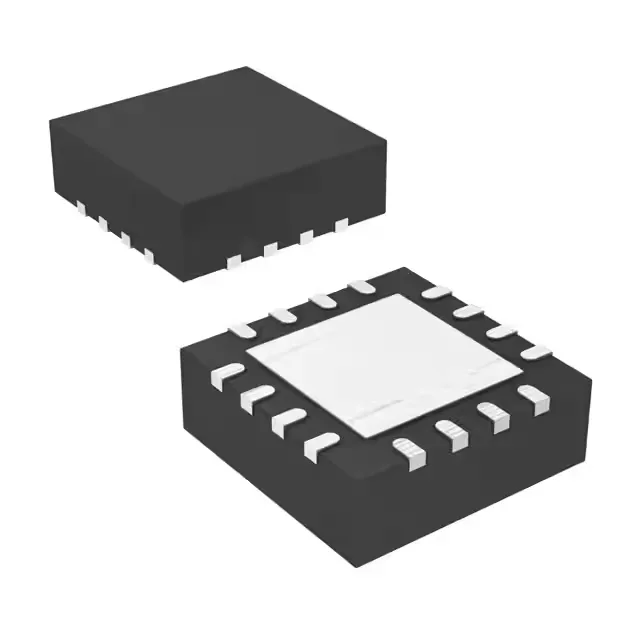
Ten I/O pins are available in the 16-QFN package; that's enough for a few sensors, a small display, and a serial link, but you'll need to multiplex if the design calls for more than a handful of discrete inputs or outputs.
Peripherals and connectivity — built-in analog and serial
On the analog side, the 8-channel 10-bit ADC covers basic sensor acquisition — temperature, light, voltage monitoring — though the 10-bit resolution means you won't get the precision of a 12-bit or 16-bit external ADC. For digital communication, the I²C, SPI, and USI (Universal Serial Interface) modules handle common peripheral buses: connect an I²C temperature sensor, an SPI flash, or a UART via the USI configured as a serial port.
That means no last-time-buy scramble, no date-code authenticity worries, and normal availability through the distribution channel. For dual-sourcing or supply resilience, TI's MSP430G2xx family includes several pin-compatible density variants (e.g., MSP430G2333 with more Flash), though a direct second-source from another manufacturer is not listed. The part is ROHS3 compliant.