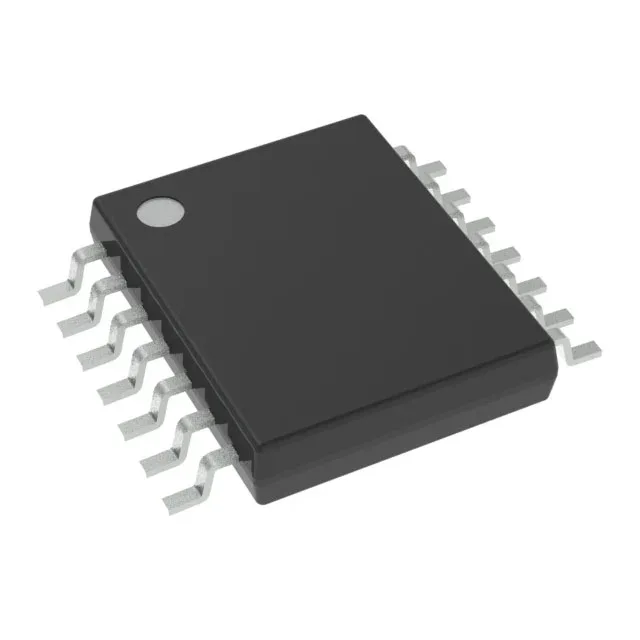
What this little MSP430 brings to the board
It is built for simple control and sensor tasks where power efficiency and a small footprint matter more than raw compute — think battery-powered data loggers, capacitive touch interfaces, or basic motor control loops in industrial and consumer gear.
16 MHz core — enough for the job, not overkill
The 16 MHz clock speed is the headline number, but for this class of part the real story is how little current it draws at that speed. The MSP430 architecture is designed for active-mode efficiency — the CPU can wake from standby, sample a sensor via the 8-channel 10-bit ADC, process the reading, and go back to sleep in microseconds. That matters when the system runs on a coin cell or a harvested energy source.
Memory budget — 4 KB Flash, 256 B RAM
It is sized for a single control loop, a few sensor reads, and a modest state machine — think a thermostat, a simple timer, or a serial bridge. The 256 bytes of RAM mean you will be counting every byte of stack and global data; the USI module handles I²C or SPI in hardware, which saves code space compared to bit-banging. If your firmware needs more headroom, look up the MSP430G2xx family — the G2553, for example, offers 16 KB Flash and 512 B RAM in the same 14-pin footprint.
Temperature range and supply — industrial, battery-friendly
The brown-out detect and POR keep the core from corrupting Flash during a slow power ramp.