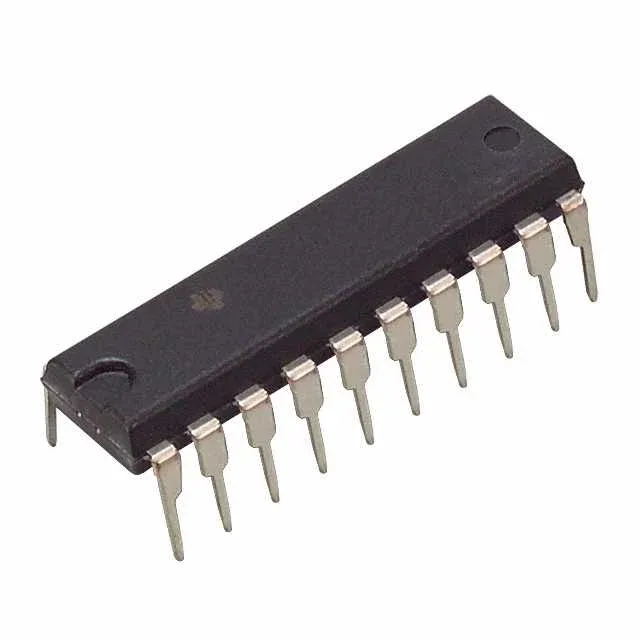
The 16 MHz clock is the core's maximum speed. For a part in the MSP430G2xx family, that throughput is enough for sensor polling, UART communication at standard baud rates, and simple control loops. If your timing budget needs better than a few percent accuracy over temperature, you can still feed an external clock into the internal oscillator's input.
Memory sizing: 4 KB Flash, 256 bytes RAM
The 4 KB Flash (4 K × 8) is the program store; 256 × 8 of SRAM holds runtime data. That is a tight footprint — think a single I²C temperature sensor with a logging buffer, or a LIN-bus node handling a few status bytes. The Flash is in-system programmable, so firmware updates are possible if you budget the bootloader space. The RAM limits stack depth and buffer sizes; a design that queues more than a few dozen bytes of UART data will need to manage the buffer carefully.
Industrial temperature range and peripherals
The peripheral set includes a brown-out detect and reset (BOR), power-on reset (POR), a watchdog timer (WDT), and a DMA controller — enough to handle low-power sleep modes with a wake-up from an external interrupt or a timer.
For BOM planning, that means no near-term obsolescence risk for new designs.